
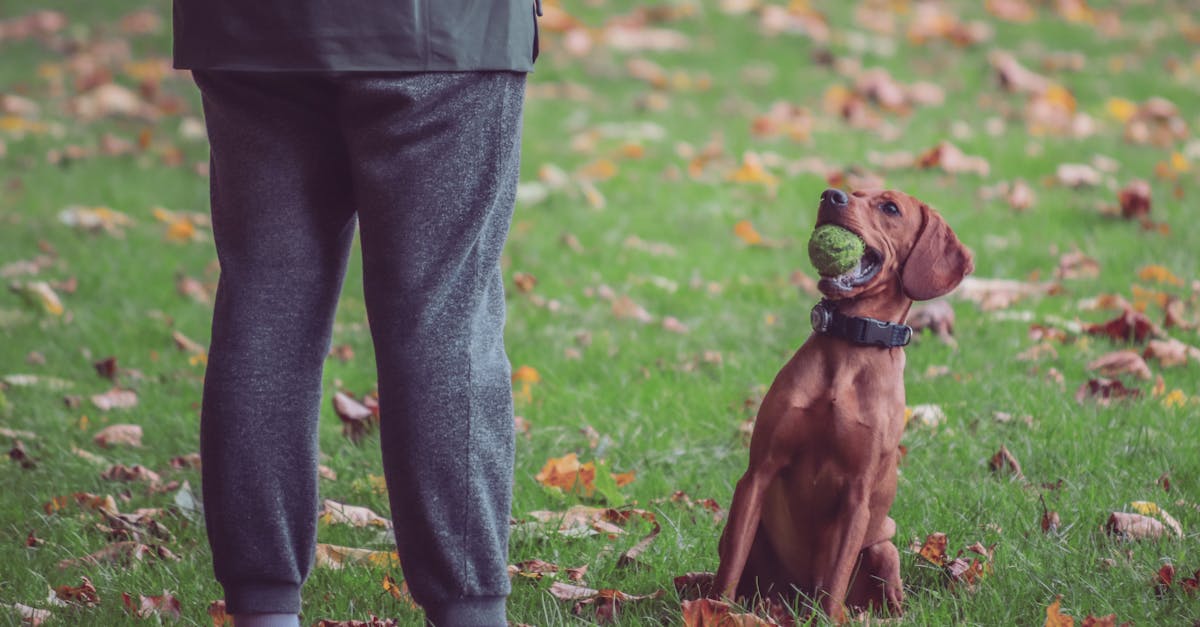
Basic obedience commands are the building blocks of a well-mannered dog and the foundation for more advanced training. More importantly, they are communication tools — ways to tell your dog what you WANT it to do (rather than only telling it what NOT to do). A dog that knows "sit," "down," "stay," and "leave it" has a toolkit for navigating the human world successfully.
Sit
Method: Luring
- Hold a treat at the dog's nose level
- Slowly move the treat up and slightly back over the dog's head
- As the nose follows up, the butt goes down (physics)
- The instant the butt touches ground → mark ("Yes!") → deliver treat
- Repeat 10 times → add the verbal cue "Sit" just before luring
- Fade the lure (empty hand motion → reward from pocket after mark)
Troubleshooting
- Dog jumps for treat: Treat is too high. Keep at nose level, move more slowly.
- Dog backs up: Practice against a wall so backing isn't an option.
Down
Method: Luring
- Start in sit position
- Hold treat at nose → lower straight down to the floor between front paws
- Once treat reaches floor, pull slightly toward you (creating an L-shape path)
- Dog's elbows touch ground → mark → reward
- If dog stands up: the lure moved too fast or too far forward. Reset.
Troubleshooting
- Dog's butt pops up: Lure is moving too far forward. Keep treat between front paws, not in front of them.
- Dog won't lie down: Try capturing — wait for natural down, then mark and reward. Or lure under a low table/chair leg.
Stay
The Three D's: Duration, Distance, Distraction
Only increase ONE variable at a time. Each variable starts at zero:
- Duration first: Dog in sit/down → count 1 second → mark and reward. Build to 5, 10, 30 seconds, 1 minute. Stay near the dog.
- Distance second: Once dog holds 30+ seconds reliably, take one step back → immediately return → mark → reward. Build distance gradually.
- Distraction last: Once duration and distance are solid, add mild distractions at close range. Build complexity.
- ALWAYS release with a release word ("Free," "OK," "Break") — dog stays until released, not until it decides to move
- If dog breaks stay: No punishment. Simply reset and reduce to the last successful level.
- Reward the STAYING, not the coming to you after. Deliver treat while dog is in position.
- Hold a treat in closed fist. Dog sniffs, licks, paws at hand.
- The moment the dog backs off or looks away → mark → reward with OTHER hand (not the closed fist treat)
- Repeat until dog immediately disengages from closed fist upon presentation
- Add verbal "Leave it" just before presenting closed fist
- Progress: open palm (cover if dog goes for it), treat on floor (cover with foot), treat at nose level
- Before going through doors (safety — prevents bolting)
- Before eating food (impulse control)
- Before exiting car (safety)
- Approach door → dog moves toward it → close door slightly (not slamming, just reducing opening)
- Dog pauses/backs up → open door more
- Dog moves toward again → reduce opening
- Dog holds position → mark → "OK!" (release) → door opens and dog goes through
Rules
Leave It
Method: Two-Treat Game
Wait
Different from "stay" — a temporary pause before proceeding through a threshold:
Method
Frequently Asked Questions
How many repetitions to learn a command?
Dogs typically need 30-50 repetitions to begin understanding a new behavior in one context. They need hundreds of repetitions across multiple contexts (generalization) before the behavior is truly reliable. Short sessions (5-10 minutes, 3-5 times daily) are more effective than long sessions.