
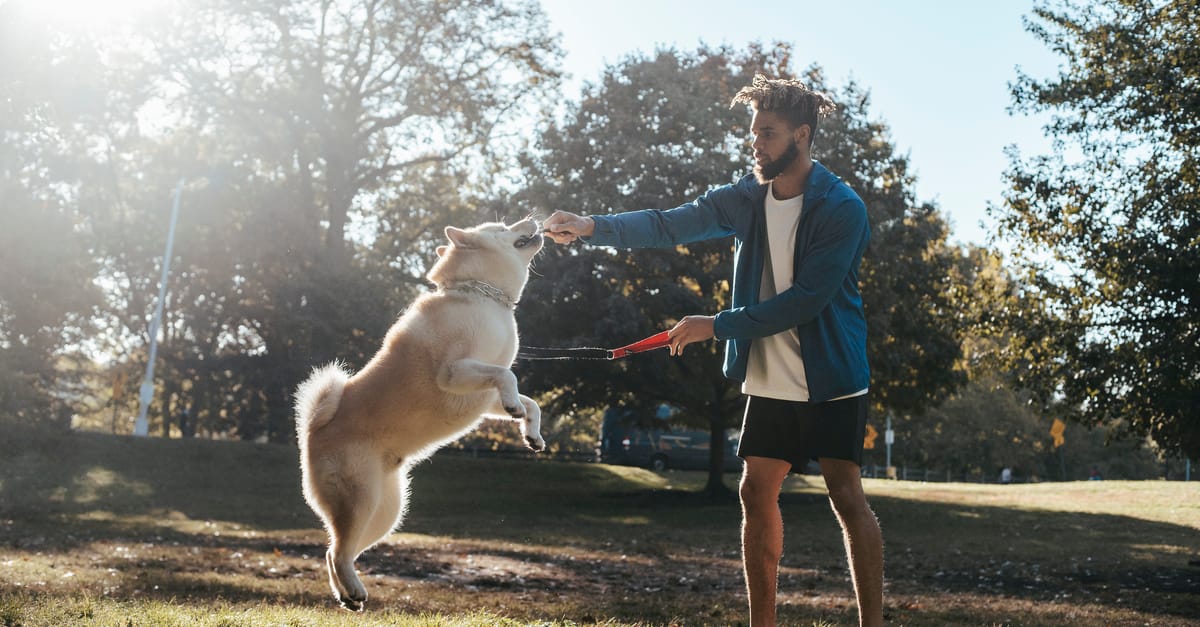
Jumping on people is the most common complaint about dog greetings — and one of the most accidentally reinforced behaviors in dog training. Every time your dog jumps and receives any attention (even negative attention like pushing away, saying "no," or making eye contact), the behavior is reinforced. The solution is straightforward in theory but requires consistency from EVERYONE who interacts with the dog.
- Why Dogs Jump
- Why Punishment Doesn't Work Long-Term
- The Protocol: Four on the Floor
- Step 1: Remove ALL Reinforcement for Jumping
- Step 2: Heavily Reinforce the Alternative
- Step 3: Extinction Burst (Expect It)
- Teaching "Sit to Greet"
- The Consistency Problem
- Management During Training
- Frequently Asked Questions
- My dog only jumps on certain people. Why?
Why Dogs Jump
- Greeting behavior: Dogs greet face-to-face. Human faces are up high. Therefore: jump.
- Attention-seeking: Jumping gets attention (even negative attention counts as reinforcement)
- Excitement: High arousal drives physical expression
- Learned behavior: It has worked before — attention, pets, treats resulted from jumping at some point
Why Punishment Doesn't Work Long-Term
- Knee to chest: Dog interprets as rough play interaction (attention = reinforcement)
- Stepping on hind toes: Inconsistent and causes pain/fear without teaching alternative
- Yelling "No!/Down!/Off!": Verbal attention IS attention = reinforcement
- Pushing away: Physical contact IS interaction = reinforcement
The Protocol: Four on the Floor
Step 1: Remove ALL Reinforcement for Jumping
- Dog jumps → immediately turn your back, fold arms, look at ceiling. ZERO eye contact, verbal response, or physical contact.
- If dog jumps on your back → step away. Remain turned away.
- Wait for all four paws on the floor.
Step 2: Heavily Reinforce the Alternative
- The instant ALL FOUR PAWS are on the floor → turn, give attention, treat, praise. Make "four on the floor" the most rewarding position possible.
- Better yet: teach "sit" as the greeting behavior. Dog approaches person → sits → THEN receives all attention/petting/treats.
Step 3: Extinction Burst (Expect It)
When a previously reinforced behavior suddenly stops working, the dog will TRY HARDER before giving up. Jumping will get WORSE before it gets better. This is called an extinction burst and it's a sign the protocol is working. Stay consistent through this phase (usually 3-7 days of increased jumping).
Teaching "Sit to Greet"
- Ask visitors to wait at the door
- Ask dog for "sit" before opening door
- Open door. If dog breaks sit → close door.
- Dog holds sit → visitor can approach and greet calmly
- If dog jumps on visitor → visitor turns away immediately (they must be briefed)
- Four paws or sit → attention resumes
The Consistency Problem
The #1 reason this protocol fails: inconsistency. If ONE person in the household (or one visitor) allows jumping occasionally, the dog learns that jumping works sometimes — which creates an intermittent reinforcement schedule (the hardest to extinguish). EVERYONE must follow the same rules.
Management During Training
- Leash when greeting visitors (prevents jumping physically while you train the alternative)
- Scatter treats on the floor when guests arrive (head down = can't jump)
- Exercise before guests arrive (lower arousal = less jumping)
- Baby gate to prevent rushing the door
Frequently Asked Questions
My dog only jumps on certain people. Why?
Those people have reinforced it. If Aunt Margaret pets the dog enthusiastically when it jumps but Dad ignores it — the dog learns to jump on Margaret and not on Dad. The dog isn't confused; it's responding correctly to differential reinforcement. Margaret needs to follow the same protocol.