
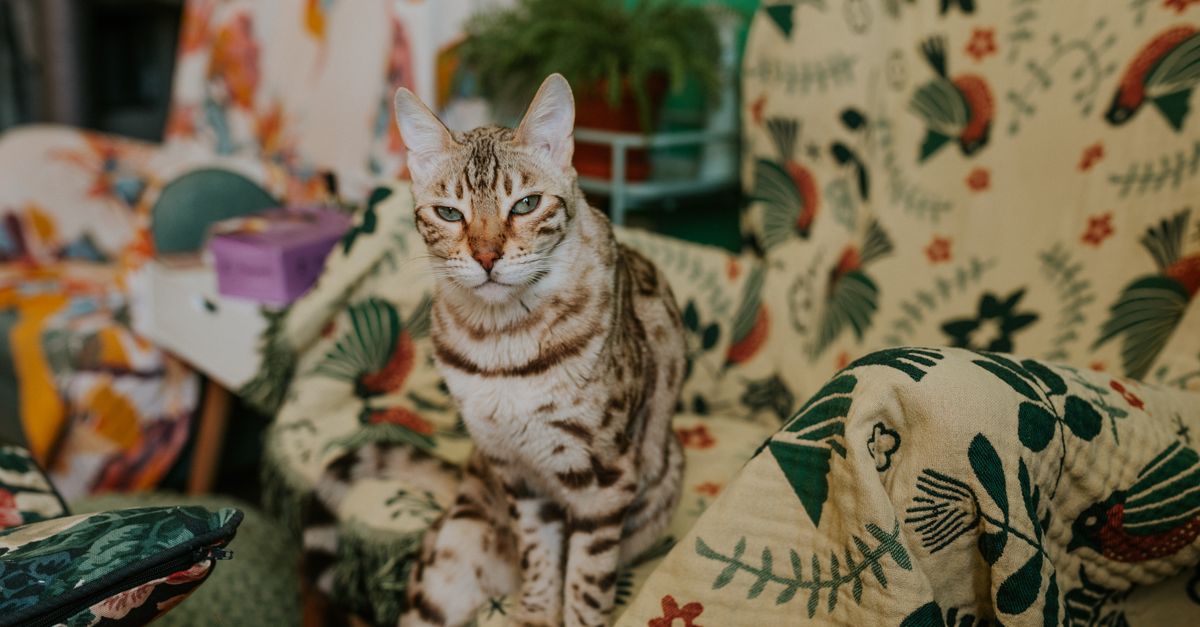
The Savannah cat is the largest and most exotic-looking domestic cat breed -- a hybrid between an African Serval and a domestic cat. With their tall, lean bodies, striking spotted coats, and enormous ears, Savannahs look like miniature cheetahs walking through your living room. But this breed comes with significant responsibilities and legal complexities.
Breed Overview
| Trait | Details |
|---|---|
| Origin | USA, 1986 (Serval x domestic cross) |
| Weight | F1: 15-25 lbs; F5+: 10-15 lbs |
| Height | Up to 17 inches at shoulder (tallest domestic cat) |
| Lifespan | 12-20 years |
| Coat | Short, spotted -- bold black spots on golden/tan |
| Activity Level | Extremely high |
Understanding Generations
| Generation | Serval % | Size | Temperament | Price Range |
|---|---|---|---|---|
| F1 | 50% | 15-25 lbs | Most wild, needs experienced owner | $12,000-$20,000+ |
| F2 | 25% | 12-20 lbs | Still wild, challenging | $6,000-$12,000 |
| F3 | 12.5% | 10-17 lbs | More manageable, still active | $3,000-$6,000 |
| F4-F5 | 6% or less | 10-15 lbs | Most domestic, recommended for pets | $1,500-$4,000 |
Legal Restrictions
Critical: Check your local laws before purchasing.
- Banned in: New York City, Hawaii, Georgia, Massachusetts, some Australian states
- F1-F3 restricted in: Many additional states and municipalities
- F4+ generally legal: Most areas consider F4+ fully domestic
- Permits required in: Some states require exotic animal permits for early generations
- Laws change frequently -- verify with your local animal control before purchasing
Personality
- Extremely active: Need massive amounts of exercise and stimulation
- Water lovers: Many love playing in water, swimming
- Jumpers: Can jump 8+ feet vertically from standing
- Loyal: Bond strongly to their owners, often dog-like in devotion
- Leash trainable: Most Savannahs take well to harness walks
- Territorial: May not accept new cats or dogs easily
- Not lap cats: Prefer interactive play over cuddling
Care Requirements
- Space: Large home with room to run and jump. Cat-proofed outdoor enclosure ideal.
- Exercise: Multiple long play sessions daily
- Diet: High-quality, high-protein diet. Some owners feed raw.
- Cat-proofing: Savannahs can open cabinets, doors, and turn on faucets
- Enrichment: Extensive puzzle toys, climbing structures, interactive play
Frequently Asked Questions
Are Savannah cats dangerous?
F4+ generation Savannahs are not dangerous -- they are domestic cats with a wild look. They can scratch or bite if mishandled (like any cat) but do not pose a safety risk beyond normal cat behavior. F1-F2 Savannahs are more unpredictable and require experienced exotic animal owners. No properly socialized Savannah of any generation has been documented attacking a human aggressively.