
Grooming

How to Deshed Your Dog Effectively During Blowing Season

How to Deshed Your Dog Effectively During Blowing Season

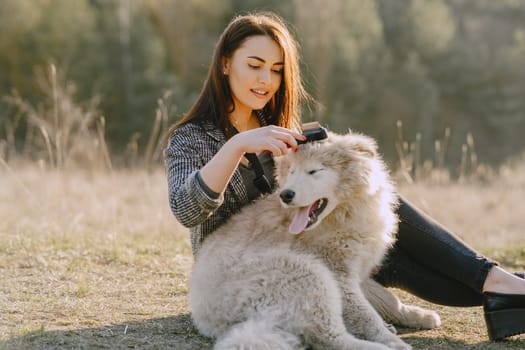
When shedding season arrives, your home can quickly become a landscape of fur tumbleweeds, and your once-groomed pup can look like they're molting. If you've ever wondered how to deshed your dog effectively during blowing season without spending hours at the groomer, you're in the right place. This guide delivers a step-by-step, tool-based approach that not only removes loose undercoat but also keeps your dog comfortable and your furniture fur-free.

1. Gather the Right Deshedding Tools and Materials

Before you begin, having the correct tools is crucial. Using a standard brush on a heavy-shedding dog is like using a fork to scoop sand. Instead, invest in tools specifically designed to reach the undercoat without damaging the topcoat.

Essential Tools

  • Deshedding rake or undercoat rake – curved metal teeth that pull loose undercoat without cutting the guard hairs.
  • Slicker brush – fine wire bristles to remove surface loose hair and tangles.
  • Shedding blade or grooming stone – ideal for short-haired breeds to lift dead hair.
  • High-velocity dryer or grooming blow dryer – blows out loose undercoat after brushing (optional but highly effective).
  • Dematting comb – for working out small mats before deshedding.

Additional Materials

  • Deshedding shampoo and conditioner – formulated to loosen dead hair and hydrate skin.
  • Non-slip mat – for safety during grooming.
  • Treats and patience – positive reinforcement makes the process easier.
  • Lint roller or fur removal tool – for cleaning up afterward.

Furthermore, consider a grooming table if your dog is large or wiggly. Having everything ready beforehand prevents mid-session frustration.

2. Prepare Your Dog and Your Space

Deshedding can be messy, so choose a location that is easy to clean—like a garage, patio, or bathroom with a drain. Lay down old newspapers or a grooming apron to catch flying fur. Additionally, make sure your dog is calm and has had a recent walk to release excess energy. Brush your dog briefly with a slicker brush to remove surface tangles. However, avoid brushing matted fur aggressively; use a dematting comb first to avoid pain.

Another important step is to check your dog's skin for any hot spots, cuts, or irritation. If you find any, skip deshedding until the skin heals. Remember, blowing season can be stressful on the skin, so working gently is key.

3. Start with a Deshedding Bath

A bath using a deshedding shampoo dramatically improves hair removal efficiency. Warm water (not hot) helps open hair follicles. Apply the shampoo and massage thoroughly into the coat, focusing on areas with the thickest undercoat – typically the back, neck, and hindquarters. Let it sit for 3–5 minutes according to product instructions; this allows ingredients to break down loose hair. Rinse completely, then apply a deshedding conditioner. Conditioner hydrates the skin and further loosens dead hair. After rinsing, towel-dry your dog but do not rub vigorously (that can cause matting).

Interestingly, some groomers recommend skipping the bath if your dog is extremely anxious or has skin issues. In that case, proceed with dry deshedding using a rake and a high-velocity dryer.

4. Dry Brush (or Blow-Dry) to Loosen Undercoat

Once your dog is damp (not soaking wet), you can use a high-velocity dryer set on low heat to blow out loose fur. Start from the hindquarters and move forward, using your free hand to direct the air upward against the hair growth. The loose undercoat will literally fly off. Be cautious around the face and ears – use a low setting or a nozzle attachment. If you don't have a dryer, let your dog air-dry partially and then use a deshedding rake on the still-moist coat. Moisture makes the undercoat easier to lift.

However, never use a blow dryer on high heat; it can burn your dog's sensitive skin. Also, keep the dryer moving constantly to avoid concentrating heat in one spot.

5. Use the Undercoat Rake in Sections

Now the main event: thorough raking. Work in small sections, about 4–6 inches at a time. Holding the rake at a 45-degree angle, gently pull through the coat in the direction of hair growth. Do not press hard; let the tool's teeth do the work. After each stroke, remove collected hair from the rake and place it in a trash bag. Repeat each section at least 2–3 times until you see significantly less hair coming out. Pay extra attention to the “furnishings” (feathering on legs and tail) if your breed has longer hair, but be gentle to avoid pulling out guard hairs.

For double-coated breeds like Huskies, Golden Retrievers, or German Shepherds, this step is critical. Moreover, avoid using a Furminator-style tool more than once a week because it can cut the topcoat if overused. A rake is safer for frequent use during peak shedding.

6. Follow Up with a Slicker Brush and Grooming Stone

After raking, switch to a slicker brush to catch any remaining loose hairs and to smooth the topcoat. Brush in gentle, long strokes from skin to hair tips. Then, for short-haired breeds, finish with a shedding blade or grooming stone. The grooming stone (also called a shedding stone) is a porous pumice-like stone that grabs loose hairs without scratching the skin. Rub it in circular motions over the coat; you'll see dead hair ball up and lift away. This final step can remove up to 20% more loose fur that the rake missed.

Additionally, check your dog's ears, tail, and behind the thighs – these spots often hold loose hair and can cause tangles later.

7. Manage After-Shed Cleanup and Skin Care

Deshedding season doesn't end after one session. To keep your home manageable, repeat the full process weekly during heavy blowing season. However, daily quick brushing with a slicker brush can help maintain progress. After grooming, wipe your dog down with a damp cloth to remove any remaining dust or dander. You can also apply a leave-in conditioner spray with aloe to soothe the skin.

For your home, use a vacuum with a pet hair attachment daily. Wash your dog's bedding weekly in hot water with a pet-safe enzyme cleaner. And don't forget to give your dog plenty of praise and treats – a positive grooming experience makes future sessions easier.

Conclusion

Learning how to deshed your dog effectively during blowing season transforms a daunting chore into a bonding activity. By gathering the right tools, following a systematic bath-and-rake routine, and managing your environment, you can drastically reduce shedding in your home while keeping your dog's coat healthy and shiny. Remember, consistent maintenance is the secret to success. Your dog will feel better, your allergies may improve, and your couch will finally get a break from the fur storm.

Share: Facebook Twitter Pinterest

Pet Care Team

Pet Care Expert

Expert in pet care with years of experience helping pet owners make informed decisions about their furry friends.

← Previous DIY Dog Haircuts at Home Tools and Techniques Next → Flea and Tick Prevention During Regular Grooming Sessions
We use cookie to improve your online experience. By continuing to browse this website, you agree to our use of cookie.

Cookies

Please read our Terms and Conditions and this Policy before accessing or using our Services. If you cannot agree with this Policy or the Terms and Conditions, please do not access or use our Services. If you are located in a jurisdiction outside the European Economic Area, by using our Services, you accept the Terms and Conditions and accept our privacy practices described in this Policy.
We may modify this Policy at any time, without prior notice, and changes may apply to any Personal Information we already hold about you, as well as any new Personal Information collected after the Policy is modified. If we make changes, we will notify you by revising the date at the top of this Policy. We will provide you with advanced notice if we make any material changes to how we collect, use or disclose your Personal Information that impact your rights under this Policy. If you are located in a jurisdiction other than the European Economic Area, the United Kingdom or Switzerland (collectively “European Countries”), your continued access or use of our Services after receiving the notice of changes, constitutes your acknowledgement that you accept the updated Policy. In addition, we may provide you with real time disclosures or additional information about the Personal Information handling practices of specific parts of our Services. Such notices may supplement this Policy or provide you with additional choices about how we process your Personal Information.


Cookies

Cookies are small text files stored on your device when you access most Websites on the internet or open certain emails. Among other things, Cookies allow a Website to recognize your device and remember if you've been to the Website before. Examples of information collected by Cookies include your browser type and the address of the Website from which you arrived at our Website as well as IP address and clickstream behavior (that is the pages you view and the links you click).We use the term cookie to refer to Cookies and technologies that perform a similar function to Cookies (e.g., tags, pixels, web beacons, etc.). Cookies can be read by the originating Website on each subsequent visit and by any other Website that recognizes the cookie. The Website uses Cookies in order to make the Website easier to use, to support a better user experience, including the provision of information and functionality to you, as well as to provide us with information about how the Website is used so that we can make sure it is as up to date, relevant, and error free as we can. Cookies on the Website We use Cookies to personalize your experience when you visit the Site, uniquely identify your computer for security purposes, and enable us and our third-party service providers to serve ads on our behalf across the internet.

We classify Cookies in the following categories:
 ●  Strictly Necessary Cookies
 ●  Performance Cookies
 ●  Functional Cookies
 ●  Targeting Cookies


Cookie List
A cookie is a small piece of data (text file) that a website – when visited by a user – asks your browser to store on your device in order to remember information about you, such as your language preference or login information. Those cookies are set by us and called first-party cookies. We also use third-party cookies – which are cookies from a domain different than the domain of the website you are visiting – for our advertising and marketing efforts. More specifically, we use cookies and other tracking technologies for the following purposes:

Strictly Necessary Cookies
These cookies are necessary for the website to function and cannot be switched off in our systems. They are usually only set in response to actions made by you which amount to a request for services, such as setting your privacy preferences, logging in or filling in forms. You can set your browser to block or alert you about these cookies, but some parts of the site will not then work. These cookies do not store any personally identifiable information.

Functional Cookies
These cookies enable the website to provide enhanced functionality and personalisation. They may be set by us or by third party providers whose services we have added to our pages. If you do not allow these cookies then some or all of these services may not function properly.

Performance Cookies
These cookies allow us to count visits and traffic sources so we can measure and improve the performance of our site. They help us to know which pages are the most and least popular and see how visitors move around the site. All information these cookies collect is aggregated and therefore anonymous. If you do not allow these cookies we will not know when you have visited our site, and will not be able to monitor its performance.

Targeting Cookies
These cookies may be set through our site by our advertising partners. They may be used by those companies to build a profile of your interests and show you relevant adverts on other sites. They do not store directly personal information, but are based on uniquely identifying your browser and internet device. If you do not allow these cookies, you will experience less targeted advertising.

How To Turn Off Cookies
You can choose to restrict or block Cookies through your browser settings at any time. Please note that certain Cookies may be set as soon as you visit the Website, but you can remove them using your browser settings. However, please be aware that restricting or blocking Cookies set on the Website may impact the functionality or performance of the Website or prevent you from using certain services provided through the Website. It will also affect our ability to update the Website to cater for user preferences and improve performance. Cookies within Mobile Applications

We only use Strictly Necessary Cookies on our mobile applications. These Cookies are critical to the functionality of our applications, so if you block or delete these Cookies you may not be able to use the application. These Cookies are not shared with any other application on your mobile device. We never use the Cookies from the mobile application to store personal information about you.

If you have questions or concerns regarding any information in this Privacy Policy, please contact us by email at . You can also contact us via our customer service at our Site.