
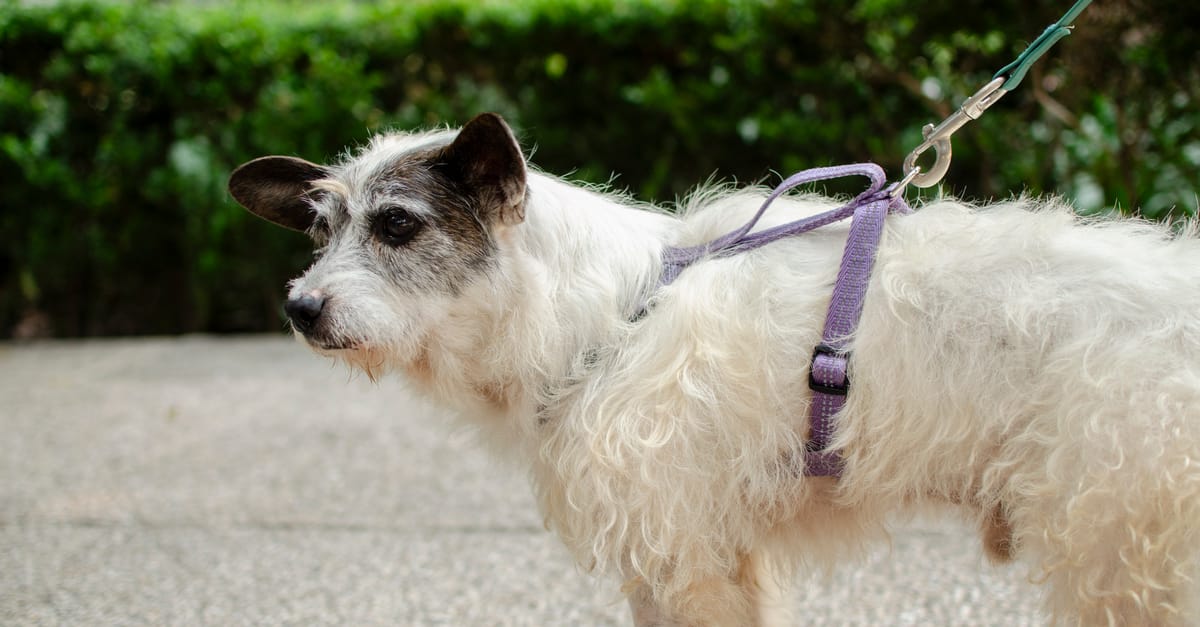
Leash reactivity — barking, lunging, growling at other dogs or people while on leash — is one of the most stressful and misunderstood behavioral problems. The reactive dog is NOT being "dominant" or "aggressive" in most cases. It is experiencing an emotional overreaction (fear, frustration, or over-arousal) that manifests as dramatic behavior because the leash prevents the dog from making its preferred choice (flee or approach).
Types of Reactivity
| Type | Root Emotion | Body Language | Goal |
|---|---|---|---|
| Fear-based | Fear/anxiety | Barking + backing away, tucked tail, weight shifted back | "Go away! Stay away from me!" |
| Frustration-based | Over-arousal/excitement | Whining + barking, pulling TOWARD stimulus, body wiggly | "I want to get to that! Let me go!" |
| Barrier frustration | Frustration at restraint | Fine off-leash but explosive on-leash | "The leash is preventing me from doing what I want!" |
The Emotional Core
Reactivity is an EMOTIONAL problem, not an obedience problem. You cannot obedience-train away an emotional response. Correcting a reactive dog (leash pops, shock collar) often WORSENS reactivity because it adds pain/fear to an already overwhelming emotional state, confirming the dog's belief that the trigger is associated with bad things.
Counter-Conditioning and Desensitization (CC/DS)
The gold standard treatment changes the dog's emotional response to triggers:
- Identify threshold distance: The distance at which the dog notices the trigger but can still think/take food (not reacting)
- Below threshold: Trigger appears at distance → high-value treats flow continuously. Trigger disappears → treats stop.
- The dog learns: Trigger appearing = awesome things happen. Emotional response shifts from "scary/frustrating" to "that predicts good things!"
- Gradually decrease distance over weeks-months as emotional response improves
Look At That (LAT) Protocol
- Dog notices trigger at distance (looks at it calmly)
- Mark ("Yes!") the moment the dog looks at the trigger
- Dog turns back to you for treat
- This creates a pattern: see trigger → look → get reward → look back at handler
- Over time, the dog automatically "checks in" with you upon seeing triggers instead of reacting
Management During Training
- Increase distance: Cross the street, U-turn, create space whenever a trigger appears closer than your training distance
- Avoid trigger stacking: Multiple triggers in sequence overwhelm the dog's coping capacity
- Walk at low-traffic times: Early morning, late evening — fewer encounters
- Use visual barriers: Parked cars, bushes, buildings to block line of sight when needed
- Front-clip harness or head halter: Management tools that reduce pulling force during reactions
When to Add Medication
If the dog cannot take food in the presence of distant triggers (too emotionally flooded), behavioral medication (fluoxetine, sertraline) can lower baseline anxiety enough to enable learning. Medication doesn't fix reactivity — it makes the dog's brain accessible for behavior modification to work.
Frequently Asked Questions
Will my dog ever be "cured" of reactivity?
Most reactive dogs can improve dramatically — often 70-90% reduction in reactive episodes with consistent CC/DS work. However, most will never be the dog that walks calmly past everything without management. "Management for life" is realistic — meaning continued awareness of threshold distances and trigger avoidance when the dog is having a tough day. Perfect is the enemy of good.
Should I let my reactive dog "meet" other dogs to socialize?
Almost never during treatment. Forced greetings with reactive dogs typically end in negative interactions that worsen the problem. Parallel walking at distance (structured, controlled) is the appropriate social exposure for reactive dogs. Uncontrolled meetings undo weeks of careful training.