
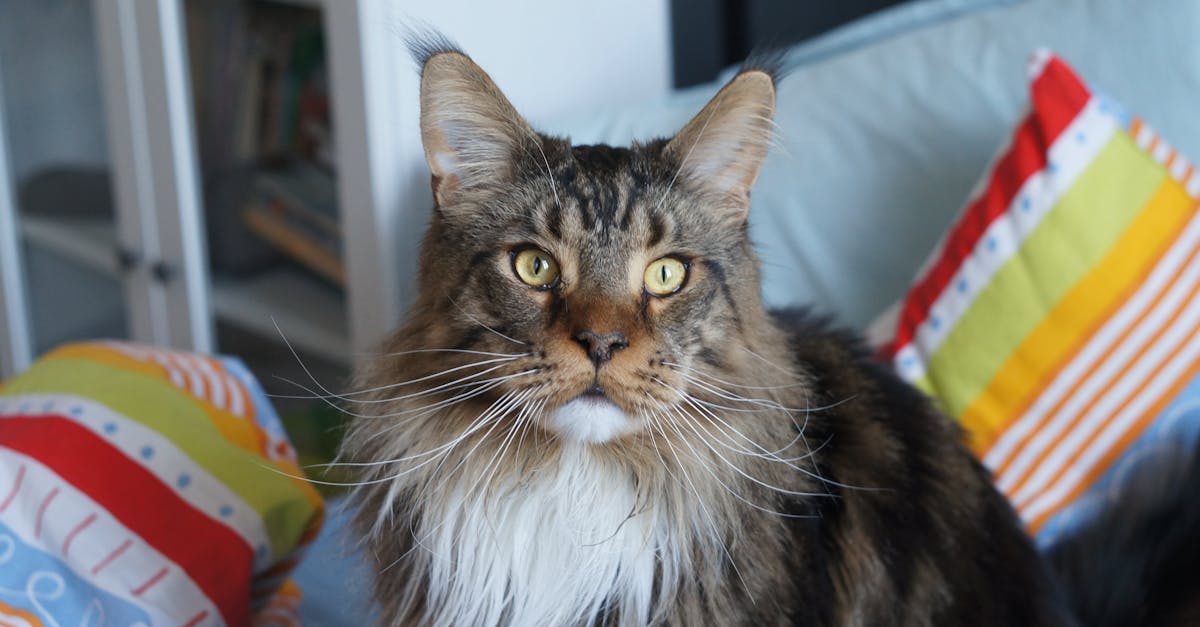
The Maine Coon is the largest domestic cat breed -- a magnificent creature that combines the size of a small dog with the grace of a wildcat and the personality of a loyal, goofy best friend. Known as "gentle giants" and "dogs of the cat world," Maine Coons are uniquely sociable and interactive.
Table of Contents
Breed Overview
| Trait | Details |
|---|---|
| Origin | Maine, USA (natural breed) |
| Weight | Males: 15-25 lbs; Females: 10-15 lbs |
| Length | Up to 40 inches (100 cm) nose to tail |
| Lifespan | 12-15 years |
| Coat | Semi-long, water-resistant, shaggy |
| Activity Level | Moderate -- playful but not hyperactive |
| Shedding | Moderate-high, seasonal heavy shedding |
Size: What to Actually Expect
- Males typically reach 15-18 lbs (some reach 25+ lbs but this is uncommon)
- They grow SLOWLY -- not fully mature until 3-5 years old
- Length is more impressive than weight -- 38-40 inch cats are common
- Do not believe Instagram -- most "giant" Maine Coons use forced perspective photography
- A healthy 18-lb Maine Coon is large. A 30-lb Maine Coon is likely overweight.
Personality and Temperament
- "Dog-like" behavior: Follow you room to room, greet you at the door, play fetch, respond to commands
- Sociable: Good with other cats, dogs, and children. Not typically one-person cats.
- Playful into adulthood: Maintain kitten-like playfulness well into senior years
- Vocal but not annoying: Famous for chirps, trills, and chattering rather than loud meowing
- Water fascination: Many Maine Coons love water -- dipping paws in bowls, playing with faucets
- Intelligent: Easily trained, food-motivated, puzzle-toy enthusiasts
Care Requirements
- Grooming: 2-3 times per week brushing (easier than Persians due to less-dense undercoat)
- Space: Need room to stretch -- large cat trees, wide perches
- Food: Higher caloric needs due to size. Quality protein-rich diet essential.
- Exercise: Interactive play daily. They enjoy puzzle feeders and fetch.
- Litter box: Need extra-large boxes (standard sizes are too small)
Health Considerations
- Hypertrophic Cardiomyopathy (HCM): Most common genetic issue. DNA test available for one mutation.
- Hip Dysplasia: More common in large breeds. X-ray screening recommended.
- Spinal Muscular Atrophy (SMA): Genetic test available. Causes muscle weakness.
- Polycystic Kidney Disease: Less common than in Persians but possible.
Frequently Asked Questions
Are Maine Coons good apartment cats?
Maine Coons can adapt to apartments if given sufficient vertical space (tall cat trees), interactive play, and enrichment. They are not as active as Bengals or Abyssinians, so a well-furnished apartment with daily play sessions works. However, they do better with more space due to their size -- a studio apartment might feel cramped for a 20-lb cat that is 40 inches long.