
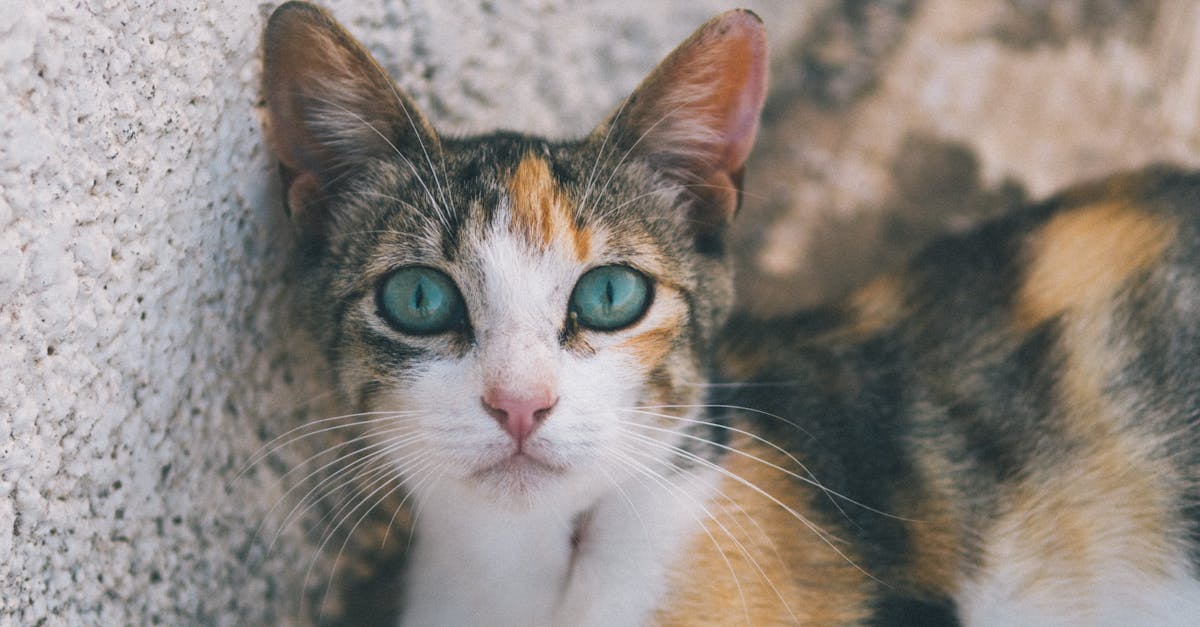
Cat coats come in a staggering variety of colors and patterns -- and the terminology can be confusing. "Is my cat a tabby or a tortoiseshell? What is the difference between calico and tortie?" This guide breaks down every major cat coat color and pattern with clear explanations.
Table of Contents
Solid Colors
| Color | Description | Genetics |
|---|---|---|
| Black | Solid jet black from root to tip | Dominant color, can "rust" in sun |
| White | Pure white, no other color | Masking gene covers all other colors |
| Blue (Gray) | Dilute version of black | Dilution gene modifies black pigment |
| Red (Orange) | Solid orange, always shows faint tabby | Sex-linked gene on X chromosome |
| Cream | Dilute version of red | Dilution gene modifies red pigment |
| Chocolate | Rich brown (like milk chocolate) | Recessive, found in specific breeds |
| Lilac (Lavender) | Pale pinkish-gray | Dilute chocolate -- very rare |
| Cinnamon | Warm reddish-brown | Rare, found in Abyssinians, Orientals |
| Fawn | Dilute cinnamon, pale warm tone | Very rare dilute |
Tabby Patterns
All cats carry the tabby gene -- some just express it more visibly:
- Classic (blotched): Bold swirling "bullseye" pattern on sides
- Mackerel: Narrow parallel stripes down the sides (like a fish skeleton)
- Spotted: Broken stripes forming spots (Ocicats, Egyptian Maus)
- Ticked (agouti): No visible body stripes -- each hair has color bands (Abyssinians)
- Patched tabby (torbie): Tabby pattern combined with tortoiseshell patches
Multi-Color Patterns
- Tortoiseshell (tortie): Intermingled patches of black and red (no white). Almost always female.
- Calico: Distinct patches of black, red, AND white. Almost always female.
- Dilute tortoiseshell: Blue and cream intermingled
- Dilute calico: Blue, cream, and white patches
- Why female? Red/black color is carried on the X chromosome. Females have two X chromosomes, allowing both colors. Males (XY) are almost always one or the other. Male calicos/torties are extremely rare (1 in 3,000) and usually sterile.
Pointed Pattern
- Dark color restricted to extremities (face, ears, paws, tail)
- Body remains lighter, temperature-sensitive gene
- Types: seal point, blue point, chocolate point, lilac point, flame point, lynx point
- Breeds: Siamese, Birman, Ragdoll, Himalayan, Balinese
Special Patterns
- Bicolor: Any color plus white (tuxedo is black and white bicolor)
- Van: Color only on head and tail, rest white (Turkish Van pattern)
- Smoke: White roots with colored tips -- appears solid until fur is parted
- Chinchilla/shaded: Only the very tips of fur are colored (silver or golden)
- Colorpoint: Dark extremities, light body (temperature-dependent pigment)
Frequently Asked Questions
Can two black cats have a tabby kitten?
Yes -- all cats carry the tabby gene. Two solid black cats can produce tabby kittens if both carry the recessive non-agouti gene (which suppresses tabby expression). The kittens inherit the tabby pattern from both parents but the non-agouti gene was not passed to all of them. Cat genetics is surprisingly complex -- many "hidden" genes can appear in offspring.