
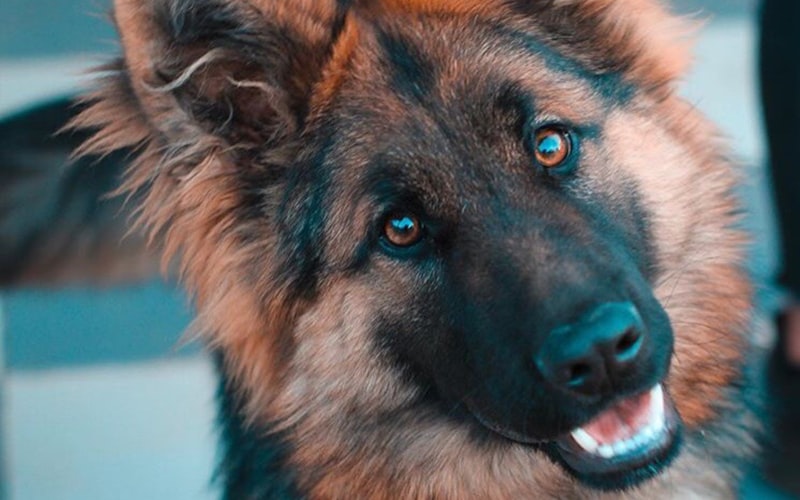
The Border Collie is the most intelligent dog breed in the world. This is not marketing — it is backed by decades of cognitive research, thousands of working dog evaluations, and the lived experience of every trainer, veterinarian, and behaviorist who has worked with the breed. Border Collies learn new commands in under 5 repetitions, understand over 1,000 words (the famous Chaser knew 1,022 nouns), and solve problems with a sophistication that researchers describe as approaching primate-level cognition.
- History: The Supreme Working Dog
- Intelligence: The Double-Edged Gift
- What "Smartest Breed" Actually Means
- The Dark Side of Intelligence
- Exercise Requirements: Not for the Casual Owner
- Temperament
- The Stare
- Sensitivity
- With Children
- Health
- Frequently Asked Questions
- Are Border Collies good for first-time owners?
- Can Border Collies live in apartments?
- My Border Collie chases shadows/lights. What do I do?
And this is exactly why the Border Collie is one of the most surrendered breeds in the country. Intelligence in a dog is not a convenience — it is a demand. A Border Collie requires more mental stimulation, physical exercise, and structured activity than any other companion breed, and the consequences of failing to provide it are severe: obsessive behaviors, anxiety, destructiveness, and neurotic habits that are heartbreaking to witness and difficult to treat.
History: The Supreme Working Dog
The Border Collie originated in the Anglo-Scottish border region (hence the name) and is the product of centuries of selection for a single criterion: herding ability. Unlike most breeds, which were standardized for appearance, Border Collies were bred exclusively for work. A dog that could move sheep efficiently survived and bred; one that couldn't did not. Appearance was irrelevant.
Old Hemp, born in 1893, is considered the progenitor of the modern Border Collie. He was quiet, powerful, and used "the eye" — an intense, hypnotic stare that controls livestock without physical contact — more effectively than any dog before him. Every registered Border Collie today traces back to Old Hemp.
Intelligence: The Double-Edged Gift
What "Smartest Breed" Actually Means
Border Collie intelligence is not just about learning tricks fast. It encompasses:
- Problem-solving: They figure out locks, latches, gates, and any containment system that has a solution
- Pattern recognition: They learn household routines and anticipate events based on subtle cues (shoes = walk, jacket = leaving)
- Social cognition: They read human body language with frightening accuracy and adjust behavior accordingly
- Language comprehension: Research Border Collies have demonstrated understanding of hundreds of words and basic syntax
- Observational learning: They learn by watching other dogs and humans, not just through direct training
The Dark Side of Intelligence
When this cognitive capacity has no outlet, it turns inward. Under-stimulated Border Collies develop:
- Compulsive behaviors: Light/shadow chasing, tail chasing, spinning, fly snapping — these are canine OCD behaviors and they are disproportionately common in Border Collies
- Hyper-vigilance: Monitoring every movement, sound, and change in the environment with anxious intensity
- Herding displacement: Herding children, cats, cars, bicycles, joggers — anything that moves
- Destructive problem-solving: Disassembling furniture, opening cabinets, escaping enclosures — using intelligence to create chaos
Exercise Requirements: Not for the Casual Owner
The exercise requirement for a Border Collie is not a number to check off — it is a lifestyle commitment:
- Physical: 2+ hours daily of vigorous activity. Running, hiking, swimming, fetch, frisbee. Walking is not sufficient — Border Collies need to run.
- Mental: 1+ hour daily of structured brain work. Training sessions, puzzle feeders, nose work, trick learning. This is as important as physical exercise.
- Work: Border Collies need a job. Herding is ideal, but agility, competitive obedience, flyball, disc dog, dock diving, or search and rescue can substitute. The job must be regular and challenging.
A Border Collie that receives physical exercise but no mental work will still be neurotic. A Border Collie that receives mental work but no physical exercise will still be destructive. You need both, every day, without exception.
Temperament
The Stare
"The eye" — the intense, unwavering gaze that Border Collies use to control livestock — is the breed's signature behavior. Your Border Collie will stare at you, at other animals, at objects of interest, with a focus so intense it is almost physical. Non-Border-Collie people find this unsettling. Border Collie people find it endearing.
Sensitivity
Border Collies are acutely sensitive to their environment and their handler's emotions. Household conflict, raised voices, and tense atmospheres cause genuine distress. They thrive in calm, predictable environments with clear expectations.
With Children
Border Collies can be good with children but will attempt to herd them — nipping heels, circling, body-blocking. Children who run and scream intensify herding behavior. Families with Border Collies must train both the dog and the children.
Health
- Hip dysplasia: OFA screening for breeding stock
- Collie Eye Anomaly (CEA): Congenital eye defect. DNA test available. Can cause blindness in severe cases.
- Epilepsy: Higher-than-average incidence. Usually manageable with medication.
- TNS (Trapped Neutrophil Syndrome): Fatal immune disorder. DNA test available.
- CL (Ceroid Lipofuscinosis): Fatal neurological storage disease. DNA test available.
- MDR1 mutation: Drug sensitivity gene present in some Border Collies. Test all breeding stock.
- Lifespan: 12-15 years
Frequently Asked Questions
Are Border Collies good for first-time owners?
No — with very rare exceptions. The breed's intensity, exercise demands, and mental needs overwhelm even experienced dog owners. If you're drawn to the intelligence, consider a Standard Poodle or Australian Shepherd (still demanding, but more forgiving of mistakes).
Can Border Collies live in apartments?
Technically yes, but practically difficult. It requires an owner who runs, hikes, or bikes daily and provides extensive mental stimulation. Most apartment Border Collies develop behavioral problems because urban living restricts the freedom and activity the breed needs.
My Border Collie chases shadows/lights. What do I do?
This is likely compulsive disorder. Stop all laser pointers and reflective toys immediately. Block access to reflections (cover windows, remove shiny objects). Increase physical and mental exercise dramatically. Consult a veterinary behaviorist — medication (fluoxetine or clomipramine) combined with behavior modification can help if caught early. Do not wait for it to resolve on its own; it will escalate.