
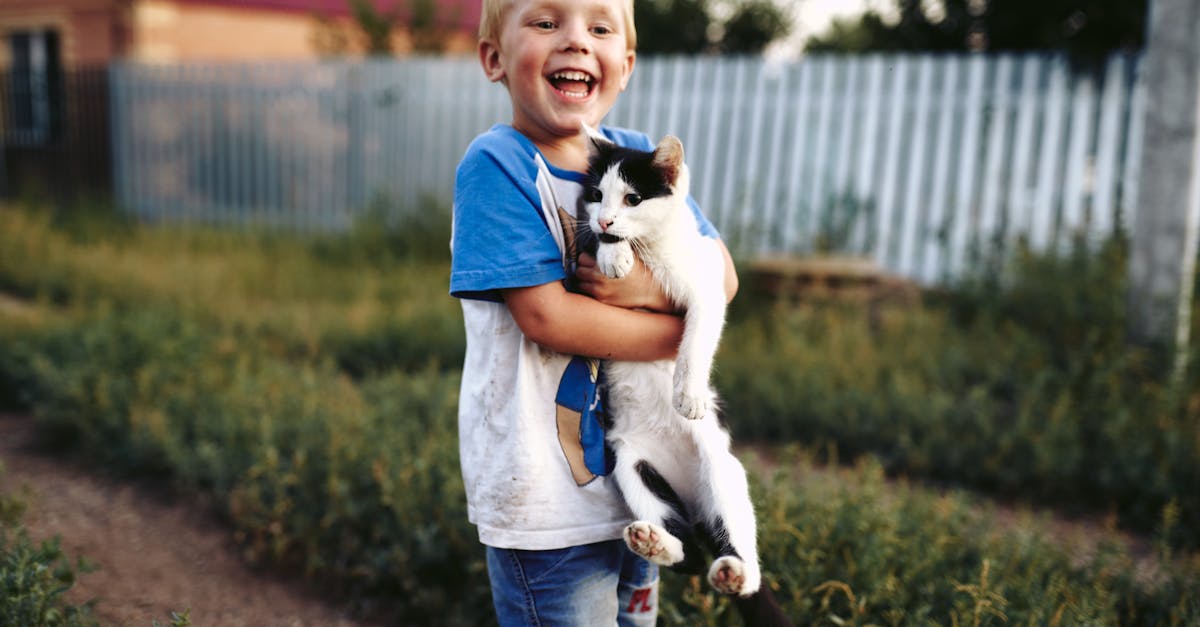
The relationship between a child and a cat can be magical -- but it requires adult guidance. Children are naturally enthusiastic, loud, grabby, and unpredictable -- all things that terrify cats. Teaching kids to respect feline boundaries creates safe, loving relationships that benefit both child and cat.
Age-Appropriate Expectations
| Age | Can Understand | Supervision Level |
|---|---|---|
| 0-2 years | Cannot learn cat rules yet | 100% supervised, always. Physical barrier when unsupervised. |
| 3-5 years | "Gentle hands," "let kitty come to you," basic rules | Always supervised. Brief, guided interactions. |
| 6-9 years | Body language basics, why cats scratch, how to pet properly | Mostly supervised. Short unsupervised if child demonstrates respect. |
| 10+ years | Full body language reading, empathy, independent safe interaction | Minimal supervision if child is responsible. |
Rules to Teach Children
- Let the cat come to you: Never chase, grab, or corner the cat
- Gentle hands only: Stroke softly in the direction fur grows (head to tail)
- No tail or ear pulling: These areas are sensitive and painful when grabbed
- No picking up (unless taught proper technique): Support butt and chest simultaneously
- Stop when the cat says stop: Teach the child to recognize "enough" signals (tail swishing, ears back, walking away)
- Never disturb a sleeping cat: Startled cats may scratch defensively
- Never corner the cat: A trapped cat will scratch or bite -- always leave an escape route
- Leave the cat alone when eating or using the litter box
Teaching Kids Cat Body Language
- Happy cat (safe to pet): Tail up, ears forward, approaches you, slow blinks
- Scared cat (leave alone): Hiding, flat ears, big eyes, crouching, hissing
- Angry cat (move away): Puffed tail, growling, swatting, ears flat back
- Done cat (stop petting): Tail swishing, walking away, skin twitching
Benefits for Children
- Empathy development (reading non-verbal cues, respecting boundaries)
- Responsibility (age-appropriate feeding, water bowl filling)
- Emotional regulation (cats model calm behavior)
- Stress reduction (petting a purring cat lowers cortisol)
- Allergy protection (early exposure may reduce allergy development)
Frequently Asked Questions
My cat scratched my child. Should I rehome the cat?
First: was the cat provoked? In almost all cases, a cat scratching a child is defensive -- the child did something (grabbed, cornered, startled, or ignored warning signals) that the cat perceived as threatening. This is a teaching moment, not a rehoming situation. Review what happened, teach the child what they should do differently, and ensure the cat has escape routes. Trim the cat's nails regularly. Only consider rehoming if: the cat shows unprovoked aggression (extremely rare) or if adequate supervision is genuinely impossible.