
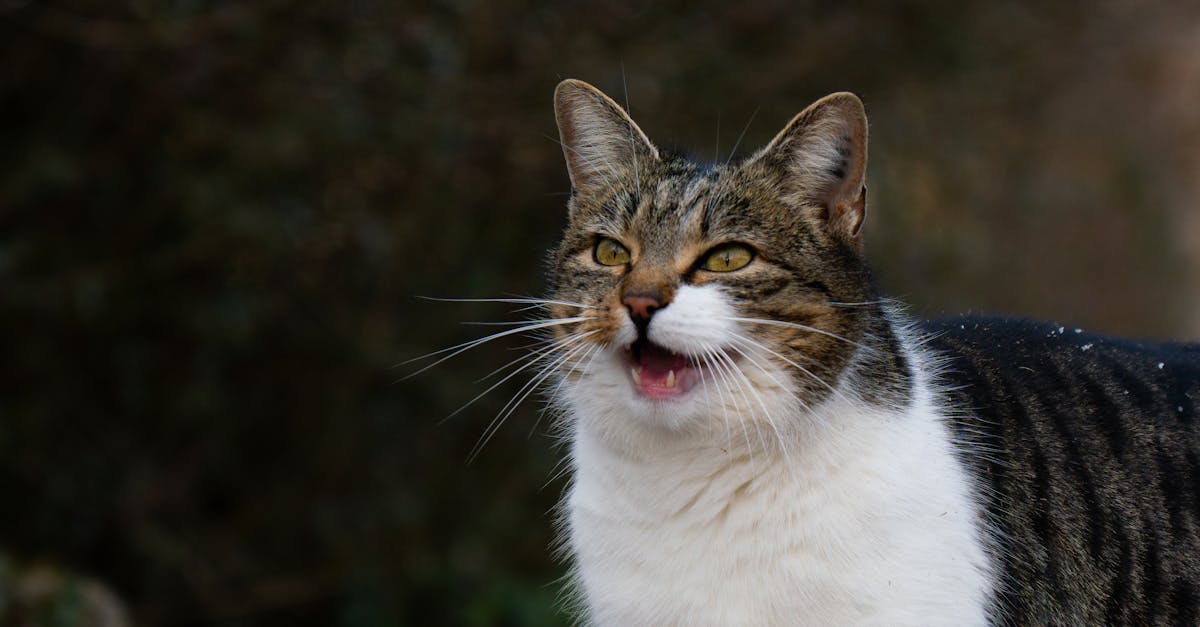
Cats have a vocabulary of over 100 distinct vocalizations -- far more than dogs. Each sound communicates specific information about the cat's emotional state, needs, or intentions. Learning to distinguish between them dramatically improves your ability to understand and respond to your cat.
Cat Sound Dictionary
| Sound | Description | Meaning |
|---|---|---|
| Short meow | Brief, standard "mew" | Greeting, acknowledgment ("Hi!") |
| Multiple meows | Several meows in succession | Excited greeting ("I am so happy to see you!") |
| Long, drawn-out meow | Extended "meoooow" | Demand or complaint ("Feed me" / "Open this door") |
| Low-pitched meow | Deep, grumbling meow | Complaint, displeasure ("I do not like this") |
| High-pitched meow | Shrill, urgent | Pain, distress, or urgent need |
| Trill/chirrup | Rolling, musical "brrrup" | Friendly greeting, "follow me," happiness |
| Purr | Continuous vibrating hum | Contentment, self-soothing, or pain management |
| Chatter/chirp | Rapid jaw clicking at prey | Frustrated hunting drive, excitement at prey |
| Hiss | Sharp exhale with open mouth | "Back off!" -- fear or defensive aggression |
| Growl | Low, rumbling vocalization | Warning -- "I am angry/scared and will fight if pushed" |
| Yowl | Long, loud, wavering cry | Distress, mating call, territorial, cognitive dysfunction |
| Scream/shriek | Loud, sharp cry | Extreme pain or intense aggression (during fights) |
| Silent meow | Mouth opens but no/minimal sound | Gentle request, possible ultrasonic component |
The Trill: Cat's Happiest Sound
- A rolling, musical chirrup that rises in pitch
- Mother cats use it to call kittens ("come here, follow me")
- Adult cats use it as a friendly greeting to humans and bonded cats
- Indicates positive mood, excitement, and social engagement
- Some cats trill constantly; others rarely -- individual personality variation
Cat-to-Cat vs Cat-to-Human Sounds
- Cat-to-cat: Primarily non-vocal (body language, scent). Hissing, growling, yowling between cats.
- Cat-to-human: Meowing is almost exclusively directed at humans. Adult cats rarely meow at each other.
- Cats developed meowing specifically to communicate with us -- they learned we respond to vocal cues more than visual ones
Breed Vocal Differences
- Very vocal: Siamese (legendary talkers), Oriental, Bengal, Burmese
- Moderate: Maine Coon (trills and chirps), Sphynx, Abyssinian
- Quiet: Persian, British Shorthair, Russian Blue, Chartreux
Frequently Asked Questions
What does the silent meow mean?
The "silent meow" -- where the cat opens its mouth in meow position but produces little to no audible sound -- has two explanations: 1) The cat IS vocalizing, but at a frequency above human hearing range (cats can produce sounds up to 79kHz; humans hear up to 20kHz). 2) It is a very soft, gentle meow -- a polite request rather than a demand. Either way, it is considered a particularly sweet communication -- gentle, non-demanding, and intimate. Many cats use it specifically with their favorite person.