
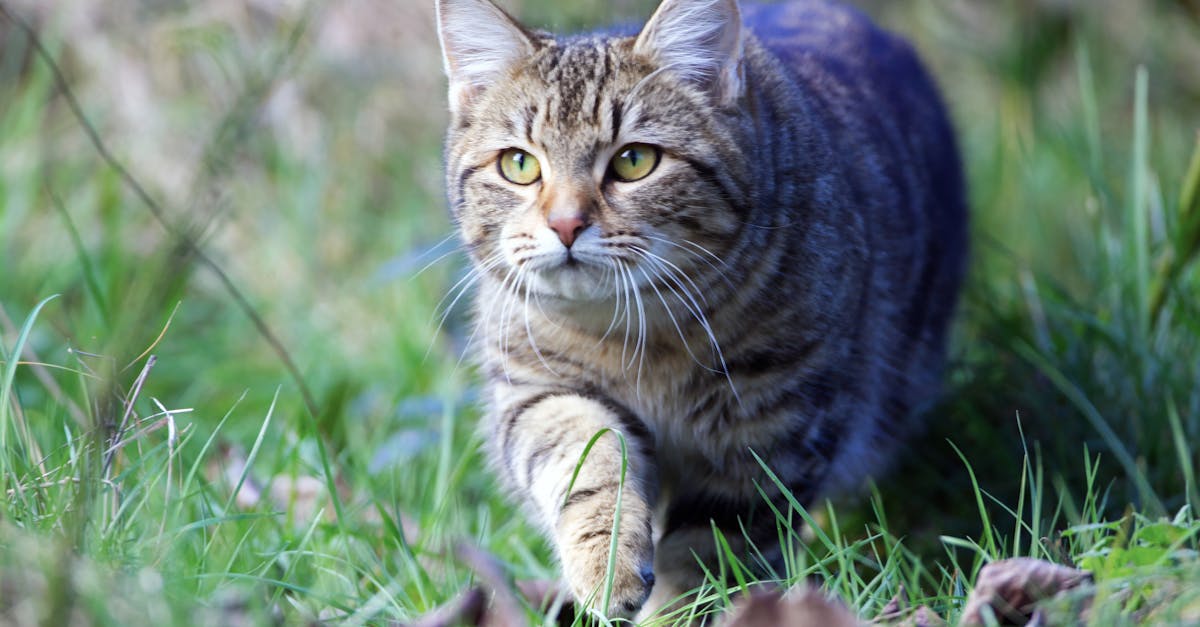
Your cat is a refined killing machine. Despite 10,000 years of domestication, the feline hunting drive remains essentially unchanged from their wild ancestors. A well-fed cat does not hunt because it is hungry -- it hunts because hunting and eating are controlled by different brain circuits. Understanding this is key to providing appropriate enrichment.
The Hunting Sequence
- Detect: Eyes lock on movement, ears rotate toward sound, body freezes
- Stalk: Low, slow approach. Body compressed, belly near ground.
- Chase: Explosive burst of speed toward prey
- Pounce: Leap and pin with forepaws
- Catch: Grab with claws, deliver bite
- Kill bite: Precision bite to the neck/spine, severing spinal cord
- Eat (optional): Separate neural circuit from hunting -- well-fed cats often skip this step
Indoor Hunting Manifestations
| Behavior | What It Is | Appropriate Outlet |
|---|---|---|
| Ankle ambushing | Your moving feet trigger the stalk-pounce sequence | Wand toys, scheduled play sessions |
| Bird watching (chattering) | Frustrated hunting drive -- jaw chattering at prey through window | Bird feeder outside window + interactive play after |
| Toy "kills" | Pouncing on and "killing" toy mice | Provide variety of prey-sized toys, rotate weekly |
| Bringing "gifts" | Presenting dead/live prey to owners (outdoor cats) | Bell on collar reduces catch rate by 50% |
| Pouncing on housemate | Redirected predatory behavior toward other cat | More interactive play to drain predatory energy |
Providing Hunting Enrichment
- Interactive play (wand toys): Mimic prey movement -- scurry away, hide, flutter. NEVER move toward the cat.
- Puzzle feeders: Make the cat "hunt" for food -- stimulates the entire predatory sequence.
- Toy rotation: Introduce 2-3 toys, remove after a few days, replace with different ones. Novelty maintains interest.
- The Hunt-Eat-Groom-Sleep cycle: End play sessions with a treat or meal. This mimics the natural cycle and promotes calm after play.
The Chattering Mystery
- That jaw-chattering/chirping sound cats make at birds through windows
- Theories: frustration vocalization, jaw rehearsal for the kill bite, excitement overflow
- Research suggests it mimics bird calls (cats in the wild may use this to lure prey)
- Completely normal -- not a sign of distress
Frequently Asked Questions
Why does my well-fed cat bring home dead animals?
Hunger and hunting are controlled by different parts of the brain. A full stomach does not suppress hunting instinct. Cats bring prey home because: 1) Home is their safe space for consuming prey, 2) Some researchers believe it is teaching behavior (as mothers bring prey to kittens), 3) It is simply the completion of the hunting sequence -- bringing the catch to a secure location. To reduce this: keep cats indoors, use a bell collar (reduces catch rate ~50%), or use Birdsbesafe collar covers (reduces bird catches by 87%).