
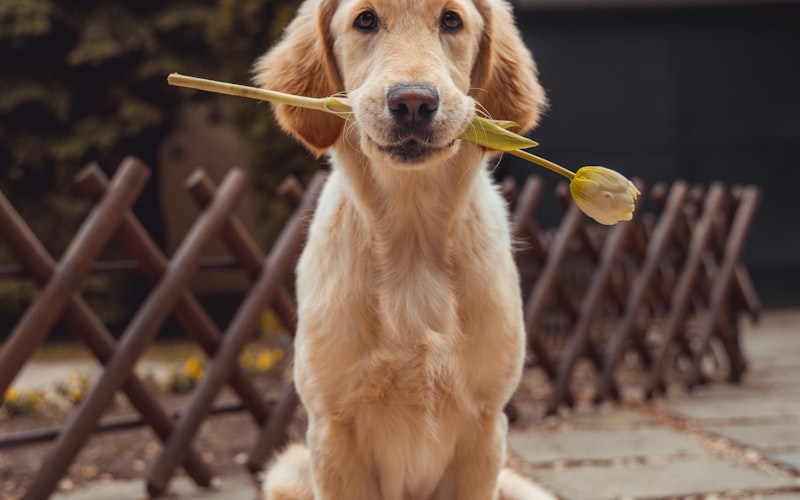
The Labradoodle — a cross between a Labrador Retriever and a Poodle — is the dog that started the designer breed revolution. Created in 1989 by Wally Conron for the Royal Guide Dogs Association of Australia, the original purpose was to produce a guide dog suitable for a blind woman whose husband had dog allergies. The cross worked for that specific case, but Conron later called the Labradoodle his "life's regret," saying he "opened a Pandora's box" of irresponsible crossbreeding.
The Reality of Crossbreeding
The fundamental challenge with Labradoodles is the same as with all first-generation crosses: you cannot predict what you'll get. Two Labradoodle puppies from the same litter can have completely different coats, temperaments, sizes, and health profiles. One may have a curly, low-shedding coat; its littermate may have a flat, shedding Lab coat.
Australian Labradoodle vs. Labradoodle
The Australian Labradoodle is a multigenerational breeding program that has incorporated Cocker Spaniel and Irish Water Spaniel in addition to Lab and Poodle, with the goal of creating a consistent breed. These dogs are more predictable than first-generation crosses but are still not a standardized breed.
Coat Types
| Type | Appearance | Shedding | Grooming |
|---|---|---|---|
| Wool (curly) | Tight curls, Poodle-like | Minimal | Daily brushing, professional every 4-6 weeks |
| Fleece (wavy) | Soft waves, most popular | Low to moderate | Brushing 3-4x weekly, professional every 6 weeks |
| Hair (flat) | Straight, Lab-like | Moderate to heavy | Minimal grooming but sheds like a Lab |
The hair/flat coat type is indistinguishable from a Lab coat in terms of shedding and allergen production. Buyers seeking a "hypoallergenic" Labradoodle with a hair coat have paid premium prices for a shedding dog.
Temperament
- Friendly and social: Both parent breeds are people-oriented, making most Labradoodles genuinely friendly
- Energetic: Labs and Poodles are both high-energy sporting/working breeds. Expect 60-90 minutes of daily exercise.
- Intelligent: Quick learners from both parent breeds
- Variable: More temperament variation than in established breeds. Some are calm; others are hyperactive. Some are confident; others are anxious.
- Mouthy: Lab heritage often produces dogs that carry objects, chew, and use their mouths more than average
Health
- Hip & elbow dysplasia: From both parent breeds. Health testing of parents is essential.
- Eye conditions: PRA from both breeds. DNA testing available.
- Addison's disease: From Poodle lines
- Exercise-Induced Collapse (EIC): From Lab lines. DNA test available.
- Ear infections: Floppy ears with hair in canals
- Cancer: Elevated risk from Lab genetics
- Lifespan: 10-15 years depending on size
Choosing Responsibly
- Demand OFA hips/elbows, cardiac clearance, eye exams, and DNA panel on both parents
- Avoid breeders who guarantee "hypoallergenic" — no honest breeder makes this guarantee for F1 crosses
- Meet the parents and observe their temperaments
- Budget $1,000-$2,000 annually for grooming
Frequently Asked Questions
Labradoodle vs. Goldendoodle?
Similar in many ways. Labradoodles tend to have slightly higher energy and more Lab-like drive. Goldendoodles tend to be slightly calmer. Both have the same grooming demands, health testing needs, and coat unpredictability in first-generation crosses.
Should I just get a Poodle instead?
Honestly? Probably. Standard Poodles are athletic, intelligent, friendly, and consistently non-shedding. Their "fussy" reputation is undeserved — a Standard Poodle in a sporting clip is an impressive, versatile dog. You get predictable coat type, established health testing protocols, and centuries of consistent breeding.