
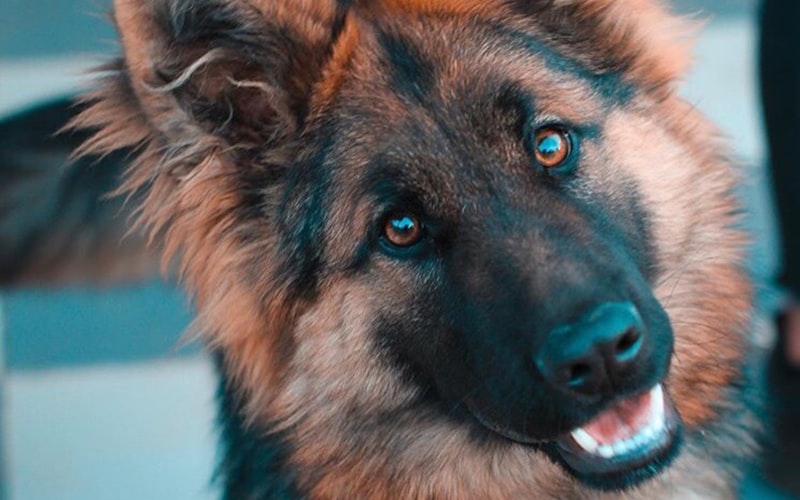
The German Shepherd Dog occupies a unique position in the canine world: simultaneously one of the most admired and most misunderstood breeds on earth. To the public, the GSD is the quintessential police dog, military hero, and loyal protector. To veterinary professionals, it's a breed plagued by structural extremes and genetic health challenges that have intensified over decades of divergent breeding philosophies. To those who live with one, it's an animal of extraordinary intelligence, unwavering loyalty, and emotional complexity that no breed description can fully capture.
- Origin & History: Max von Stephanitz's Vision
- The Critical Split: Working Lines vs. Show Lines
- West German Show Lines (SV/WUSV)
- American Show Lines (AKC)
- Working Lines (Czech, DDR, Belgian Ring)
- Temperament: The Velcro Dog With a Badge
- Loyalty and Protectiveness
- Intelligence
- Socialization: Non-Negotiable
- Health: The Honest Assessment
- Hip & Elbow Dysplasia
- Degenerative Myelopathy (DM)
- Exocrine Pancreatic Insufficiency (EPI)
- Bloat (GDV)
- Exercise & Training Requirements
- Is the German Shepherd Right for You?
- Frequently Asked Questions
- Are German Shepherds aggressive?
- How long do German Shepherds live?
- Are they good with children?
This guide is written for the prospective or current GSD owner who wants the unvarnished truth about the breed — the brilliance and the baggage, the devotion and the demands.
Origin & History: Max von Stephanitz's Vision
The German Shepherd as we know it was created by a single man with a singular vision. Captain Max von Stephanitz attended a dog show in 1899 and purchased a dog named Hektor Linksrhein — later renamed Horand von Grafrath — which he considered the ideal working dog. Von Stephanitz founded the Verein für Deutsche Schäferhunde (SV) that same year and established the breed standard with one guiding principle: "Utility and intelligence."
Von Stephanitz's philosophy was explicitly anti-aesthetic: the dog's form must serve its function. A German Shepherd should be able to trot effortlessly for hours, clear obstacles, apprehend suspects, and think independently — all while remaining controllable by its handler. This vision produced one of history's most versatile working dogs. Tragically, much of the modern show-bred GSD has drifted far from von Stephanitz's original intent.
The Critical Split: Working Lines vs. Show Lines
Understanding this split is not optional — it is the most important decision you will make when choosing a German Shepherd.
West German Show Lines (SV/WUSV)
- Appearance: The classic black-and-red saddle pattern, more angulated rear, sloped topline
- Temperament: Bred for breed surveys (Körung) that still require basic protection and tracking tests, so these dogs retain working ability, though less intense than working lines
- Health: German SV requires hip/elbow certification before breeding — generally better structural health than American show lines
- Best for: Active families who want a versatile companion with moderate working drive
American Show Lines (AKC)
- Appearance: Extreme rear angulation, dramatically sloped topline, heavier bone
- Temperament: Generally softer, lower drive, less intense than European lines
- Health concern: The exaggerated structure has been linked to higher rates of hip dysplasia and degenerative myelopathy. Many working GSD enthusiasts and veterinary orthopedists have publicly criticized the AKC show standard's effect on the breed's structural soundness
- Best for: Lower-energy households who prioritize appearance and calm temperament
Working Lines (Czech, DDR, Belgian Ring)
- Appearance: Straighter topline, more compact build, sable or black coloring common
- Temperament: High drive, intense focus, strong nerve, confident — these dogs need a job
- Health: Generally the most structurally sound GSDs, as breeders prioritize function over form
- Best for: Experienced handlers, working applications (police, military, search and rescue, competitive sport)
Temperament: The Velcro Dog With a Badge
The German Shepherd bonds deeply and specifically. Unlike Labs or Golden Retrievers, who love everyone equally, a GSD forms a profound attachment to its primary person and family unit. This loyalty is the breed's greatest quality and its greatest challenge.
Loyalty and Protectiveness
A well-bred, well-socialized GSD has natural protective instincts that do not require training. They assess situations, read body language, and respond proportionally. The ideal GSD is aloof but not aggressive with strangers — watchful, neutral, and confident. Fearful or indiscriminately aggressive GSDs are poorly bred, poorly socialized, or both.
Intelligence
Ranked #3 in Stanley Coren's The Intelligence of Dogs, GSDs learn new commands in fewer than 5 repetitions and obey first commands 95% of the time. But intelligence without purpose creates problems: a bored GSD will find its own entertainment, and you won't like what it chooses.
Socialization: Non-Negotiable
GSD puppies must be exposed to a wide variety of people, dogs, environments, sounds, and surfaces between 8-16 weeks. This is the critical socialization window, and missing it with a GSD has more severe consequences than with most breeds. Under-socialized GSDs become fearful, reactive, and potentially dangerous. Puppy kindergarten, controlled exposure outings, and positive experiences with strangers are essential, not optional.
Health: The Honest Assessment
Hip & Elbow Dysplasia
The GSD is among the most commonly affected breeds. OFA data shows approximately 20% of GSDs have dysplastic hips. Both parents must have OFA Good/Excellent ratings or "a-normal" SV certification (German system). PennHIP evaluation is even more predictive.
Degenerative Myelopathy (DM)
A progressive spinal cord disease causing hind-end paralysis, typically starting at 8-14 years. A DNA test (SOD1 mutation) identifies at-risk dogs. Approximately 20% of GSDs test as genetically at-risk. There is no treatment. Responsible breeders test and avoid breeding two at-risk dogs together.
Exocrine Pancreatic Insufficiency (EPI)
The pancreas stops producing digestive enzymes. Affected dogs lose weight despite eating voraciously, produce large volumes of pale, fatty stool, and develop nutrient deficiencies. Manageable with enzyme supplementation but requires lifelong treatment. More common in GSDs than any other breed.
Bloat (GDV)
As a deep-chested breed, GSDs are at elevated risk for gastric dilatation-volvulus — a life-threatening emergency where the stomach twists on its axis. Prophylactic gastropexy (surgical stomach tacking) during spay/neuter is increasingly recommended by veterinary surgeons for at-risk breeds.
Exercise & Training Requirements
- Exercise: Minimum 90 minutes daily for working lines, 60+ minutes for show lines. Include structured walks, off-leash running (in secure areas), and retrieval or tug games.
- Training: Begin immediately. GSDs thrive with clear structure and consistent expectations. Positive reinforcement combined with fair corrections produces the best results. Pure positive-only methods may be insufficient for high-drive working lines.
- Mental work: Nose work, tracking, obedience drills, puzzle toys. A GSD that works its brain for 20 minutes is more tired than one that runs for an hour.
Is the German Shepherd Right for You?
Yes if:
- You want a deeply bonded, intelligent, trainable companion
- You can commit to daily exercise, training, and mental stimulation
- You're prepared for extensive socialization during puppyhood
- You can budget for health screening and potential medical costs
- You're experienced with dogs or committed to working with a professional trainer
No if:
- You want a dog that loves everyone equally
- You work long hours and the dog will be alone frequently
- You're not willing to invest in training
- You live in a breed-restricted community (GSDs are frequently banned by insurance companies and HOAs)
- You want a low-shedding dog (GSDs shed heavily year-round with two seasonal coat blows)
Frequently Asked Questions
Are German Shepherds aggressive?
Well-bred, well-socialized GSDs are confident and stable, not aggressive. Aggression in the breed almost always stems from poor breeding (nerve weakness, fear-based temperament), inadequate socialization, or abusive handling. The breed's bite statistics are inflated by its popularity and by widespread irresponsible breeding.
How long do German Shepherds live?
Average lifespan is 9-13 years. Working lines and European-bred dogs tend toward the longer end. Maintaining lean body condition, joint support supplementation, and regular veterinary screening extend both lifespan and quality of life.
Are they good with children?
Well-bred GSDs from reputable lines are excellent family dogs. They are naturally protective of children in their household. However, their size and energy require supervision with toddlers, and their herding instinct may cause them to nip at running children's heels — a behavior that must be redirected early.