
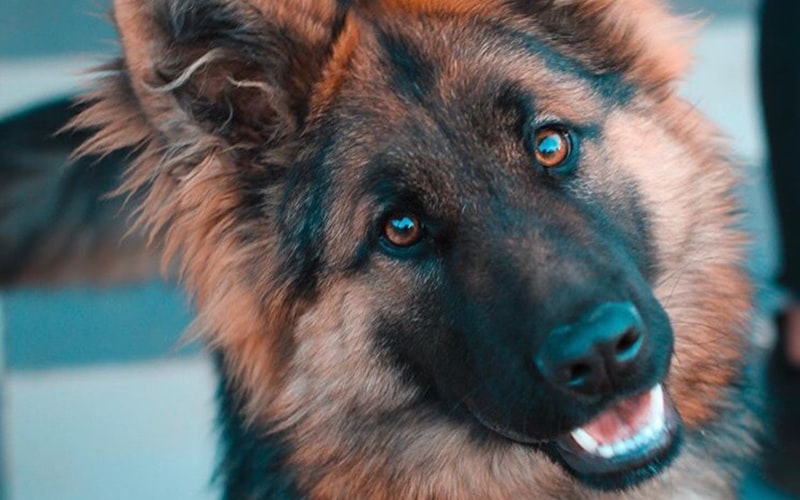
The Australian Shepherd — which is not actually from Australia — is one of the most capable, intelligent, and beautiful dogs you will ever encounter. It is also one of the most frequently surrendered by overwhelmed owners who made the understandable mistake of confusing "intelligent" with "easy." An Australian Shepherd is a high-performance machine built for all-day ranch work, and placing one in a suburban home with a 30-minute daily walk is like parking a Formula 1 car in a school zone and wondering why it keeps revving.
- History: Made in America (Really)
- The Work Ethic Problem (For Pet Owners)
- Temperament: Brilliant, Devoted, Intense
- Intelligence
- Loyalty
- The Herding Instinct in Your Living Room
- The MDR1 Gene: Critical Knowledge
- Merle Genetics: Why It Matters
- Health Profile
- Exercise & Activity Requirements
- Frequently Asked Questions
- Are Australian Shepherds good for first-time owners?
- Do Aussies get along with cats?
- Why does my Aussie stare at me?
History: Made in America (Really)
Despite the name, the Australian Shepherd was developed in the western United States during the 1800s. The "Australian" part likely refers to the Australian-origin sheep (and their Basque shepherds) that arrived in California during the Gold Rush. American ranchers crossed various herding dogs — likely including Collies, Border Collies, and dogs from the Basque region — to produce a versatile ranch dog capable of working cattle, sheep, and any other livestock in the rugged terrain of the American West.
The result was a medium-sized herding dog with extraordinary stamina, problem-solving intelligence, and an almost compulsive work ethic. Aussies became fixtures on ranches and rodeo circuits, and their flashy merle coats and piercing blue eyes caught the public's attention. AKC recognition came in 1993 — remarkably recent for such a well-established breed.
The Work Ethic Problem (For Pet Owners)
The Australian Shepherd's fundamental challenge as a pet is that it was designed to work all day. Not one hour. Not two hours. All day. A working Aussie on a ranch covers 15-20 miles daily, makes hundreds of independent decisions, physically controls unpredictable livestock, and does this in heat, cold, rain, and dust.
When you bring this animal into a suburban home, that drive doesn't disappear — it redirects. Without adequate outlets, Australian Shepherds will:
- Herd children (nipping at heels, circling, body-blocking)
- Herd other pets (cats will be particularly terrorized)
- Develop obsessive behaviors (spinning, shadow chasing, light fixation)
- Become destructive (not out of spite, but from unbearable psychological pressure to DO SOMETHING)
- Bark excessively (alerting to everything because their vigilance system has no livestock to monitor)
Temperament: Brilliant, Devoted, Intense
Intelligence
Aussies are not just smart — they are observationally smart in a way that can be unsettling. They watch you. They learn your routines, your moods, your habits. They anticipate what you're going to do based on subtle cues you don't know you're giving. Many Aussie owners report that their dog "knows" they're about to go somewhere before they reach for their keys.
Loyalty
Aussies bond deeply with their family and can be reserved with strangers. This is not hostility — it is the herding dog's natural discernment between "my flock" and "everything else." Socialization moderates this, but an Aussie will always care more about its people than about random strangers, and that's by design.
The Herding Instinct in Your Living Room
Herding behavior in a pet Aussie manifests as: nipping at running children's ankles, circling people or animals to control their movement, staring intensely (the "eye" that controls livestock), and body-blocking doorways or hallways. These are not behavioral problems — they are the breed performing its genetic job on the wrong species. Redirect with structured activities; punishing herding instinct creates confusion and anxiety.
The MDR1 Gene: Critical Knowledge
Approximately 50% of Australian Shepherds carry a mutation in the MDR1 (Multi-Drug Resistance 1) gene. This mutation makes certain common medications potentially fatal:
- Ivermectin (common dewormer — higher doses are dangerous)
- Loperamide (Imodium — over-the-counter anti-diarrheal)
- Several chemotherapy drugs
- Some sedatives and anesthetics
Every Australian Shepherd must be tested for MDR1 status. This is a simple cheek swab DNA test. If your vet is not aware of MDR1, educate them or find a vet who is. Administering ivermectin at standard doses to an MDR1-affected Aussie can cause seizures, coma, and death.
Merle Genetics: Why It Matters
The merle coat pattern (mottled patches of color on a lighter background) is one of the breed's most striking features. But merle genetics carry a serious health concern:
Health Profile
- Hip dysplasia: OFA screening required for breeding stock
- Eye conditions: Cataracts, iris coloboma, Progressive Retinal Atrophy. Annual CERF exam recommended.
- Epilepsy: Higher-than-average incidence in the breed
- Cancer: Hemangiosarcoma and lymphoma are the leading causes of death in older Aussies
- Autoimmune conditions: Thyroiditis, lupus, and other autoimmune diseases occur at elevated rates
- Lifespan: 12-15 years
Exercise & Activity Requirements
This is not a section to skim. Exercise is the single most important factor in Australian Shepherd ownership:
- Minimum: 90-120 minutes of vigorous daily exercise (not walking — running, hiking, swimming, fetching)
- Mental work: 30-60 minutes daily of structured brain activity — obedience drills, trick training, puzzle feeders, nose work
- Ideal activities: Agility (Aussies dominate this sport), herding trials, flyball, disc dog, dock diving, bikejoring
- The equation: Physical exercise + mental stimulation = happy Aussie. Missing either component results in behavioral problems regardless of how much of the other you provide.
Frequently Asked Questions
Are Australian Shepherds good for first-time owners?
Generally no. Their intensity, exercise requirements, and training demands are overwhelming for inexperienced owners. If you're set on the breed, commit to a professional training program and honestly assess whether your lifestyle can accommodate 2+ hours of daily activity indefinitely — not just during the honeymoon period.
Do Aussies get along with cats?
It depends on the individual dog's herding drive. Some Aussies coexist peacefully with cats; others persistently herd, chase, and stress feline housemates. Cats that run trigger the herding instinct. If you have cats, seek breeders who can identify lower-drive puppies, and supervise interactions carefully.
Why does my Aussie stare at me?
You're being herded. The intense stare (the "eye") is how Aussies control livestock — they fix their gaze on the animal to influence its movement. When your Aussie stares at you, it is either waiting for direction, trying to influence your behavior, or both. It's a compliment, in a very Aussie way — you're the most important thing in its world.