
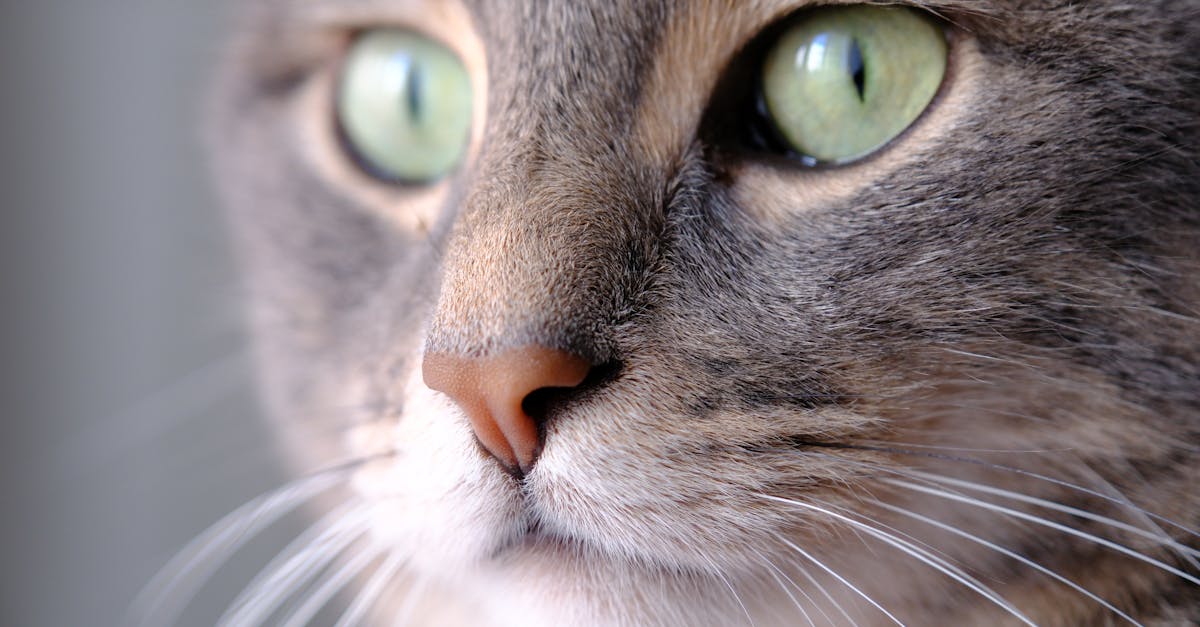
Cat whiskers (vibrissae) are not just decorative -- they are sophisticated sensory organs that provide cats with a three-dimensional understanding of their environment. Each whisker connects to 100-200 nerve cells, making them as sensitive as human fingertips.
Whisker Functions
- Spatial awareness: Whiskers are approximately the width of the cat's body -- if whiskers fit through an opening, the cat fits
- Air current detection: Sense changes in air flow that indicate nearby objects, walls, or approaching animals
- Night navigation: Allow confident movement in complete darkness by detecting objects without touching them
- Prey detection: Whiskers can detect the movement of prey and guide the kill bite to the precise neck location
- Emotional expression: Position communicates mood (forward = curious/happy; back = fearful/aggressive)
- Vibration sensing: Detect ground vibrations through the whiskers touching surfaces
Whisker Facts
| Fact | Detail |
|---|---|
| Number | 12 on each side of muzzle (24 total mystacial), plus eyebrow, chin, and wrist whiskers |
| Depth | Roots are 3x deeper than regular fur, surrounded by blood vessels and nerves |
| Sensitivity | Can detect movements as small as 1/2000th of the width of a human hair |
| Growth | Shed and regrow naturally (like fur). Full regrowth: 2-3 months. |
| Proprioceptors | Each whisker has its own proprioceptor that senses position |
Whisker Fatigue
- What it is: Sensory overload from whiskers repeatedly touching the sides of narrow food/water bowls
- Symptoms: Cat paws food out of bowl, seems reluctant to eat from a full bowl, eats from the center only
- Solution: Wide, flat dishes or whisker-friendly bowls (wide enough that whiskers do not touch sides)
- Controversy: Some veterinarians debate whether whisker fatigue is a real clinical condition or more of a preference. Regardless, wide bowls are better for cat comfort.
Whisker Position and Emotion
- Forward and spread: Curious, friendly, engaged, hunting
- Relaxed to the side: Calm, content, neutral
- Pulled back tight against face: Fearful, stressed, defensive
- Pushed slightly forward: Alert, interested, ready to interact
Never Trim Cat Whiskers
- Trimming whiskers is like blindfolding a cat -- removes critical sensory input
- Cats with trimmed whiskers become disoriented, clumsy, and anxious
- Whiskers do NOT need grooming or maintenance from owners
- Shed whiskers are normal -- they regrow naturally
Frequently Asked Questions
My cat lost some whiskers. Should I worry?
Individual whiskers shed and regrow naturally on a regular cycle -- finding the occasional whisker on the floor is normal (some owners collect them). Concern is warranted if: multiple whiskers are broken or missing simultaneously (possible trauma, rough play, or skin condition), whiskers appear thin or brittle (nutritional deficiency), or the cat shows signs of disorientation. Whiskers regrow in 2-3 months. If you notice significant whisker loss, a vet check can rule out underlying issues.