
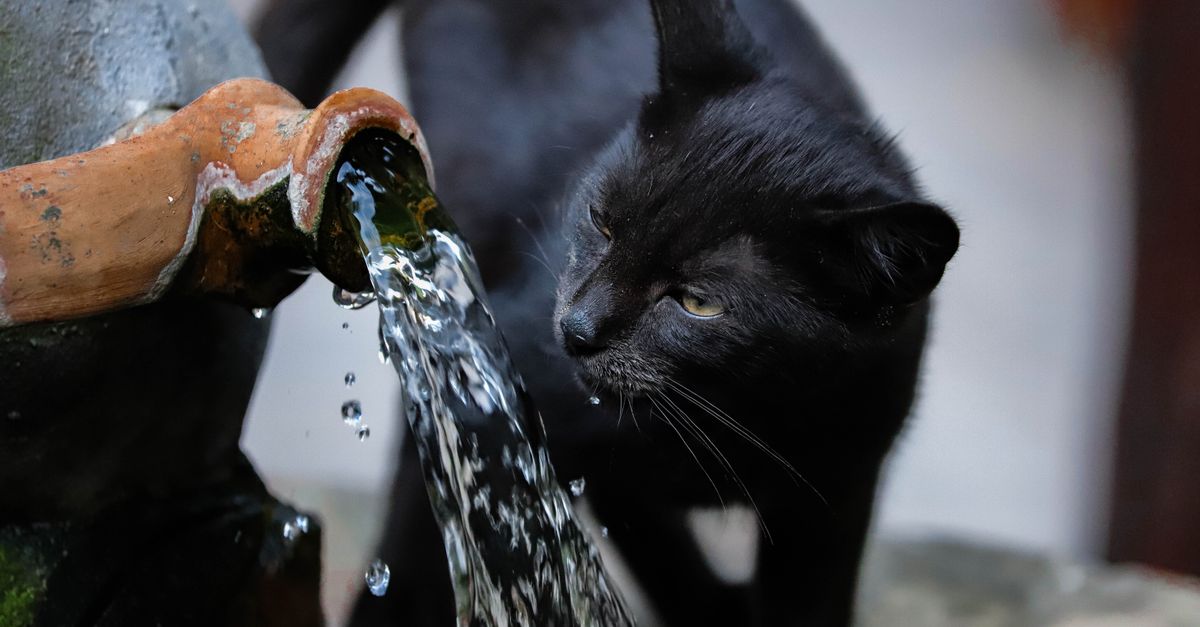
Cats evolved in desert environments and have a naturally low thirst drive -- they are designed to get most of their moisture from prey. Domestic cats eating dry food are chronically dehydrated, which contributes to kidney disease, urinary crystals, and constipation. Getting your cat to drink more is one of the simplest health improvements you can make.
Why Cats Do Not Drink Enough
- Desert ancestry: Cats descended from African wildcats that survived on minimal water
- Low thirst drive: Cats do not feel "thirsty" until already significantly dehydrated
- Prey-based hydration: Wild cats get 70-80% of water from prey -- domestic cats on kibble get almost none from food
- A cat on dry food needs to drink 7-9 oz of water daily -- most drink 3-4 oz at best
Signs of Dehydration
| Test | How | Dehydrated Sign |
|---|---|---|
| Skin tent test | Gently pinch skin on back of neck, release | Skin stays "tented" for 2+ seconds instead of snapping back |
| Gum test | Press gum above canine tooth, release | Color returns slowly (2+ seconds) instead of immediately |
| Eye appearance | Look at eyes | Sunken, dull eyes |
| Lethargy | Activity level | Unusually tired, less playful |
| Litter box | Check urine clumps | Small, dark, concentrated clumps (or no urination) |
12 Proven Ways to Increase Water Intake
- Feed wet food: The single most effective strategy. Wet food is 70-80% water.
- Cat water fountain: Moving water attracts cats. Increases intake 30-50% on average.
- Multiple water stations: Place bowls in 3-4 locations around the house.
- Wide, shallow bowls: Cats dislike whisker fatigue from narrow bowls.
- Fresh water daily: Cats prefer fresh -- change water at least once daily.
- Glass or ceramic bowls: Cats prefer these over plastic (which can retain odors).
- Water away from food: Cats instinctively avoid water near food sources (prey contamination instinct).
- Add water to food: Mix 1-2 tablespoons of water into wet food.
- Flavor the water: A few drops of tuna juice or low-sodium chicken broth.
- Ice cubes: Some cats love batting and licking ice cubes.
- Dripping faucet: Many cats drink from a slow-dripping faucet -- consider a fountain that mimics this.
- Water temperature: Some cats prefer room temperature, others like cool -- experiment.
Best Cat Water Fountains
| Fountain | Material | Price | Best For |
|---|---|---|---|
| PetSafe Drinkwell | Plastic/Stainless | $$ | Budget option, widely available |
| Catit Flower Fountain | Plastic | $ | Budget, attractive flower design |
| Pioneer Pet Raindrop | Stainless Steel | $$$ | Durable, easy to clean, quiet |
| Veken Pet Fountain | Plastic | $ | Best budget option, 95oz capacity |
Frequently Asked Questions
Is tap water safe for cats?
In most developed areas, tap water is perfectly safe for cats. If your water is heavily chlorinated and your cat avoids it, try filtered water or let tap water sit overnight (chlorine evaporates). Avoid distilled water long-term as it lacks minerals. If you would drink your tap water, your cat can too. Cats with kidney disease may benefit from filtered water to reduce mineral content -- ask your vet.