
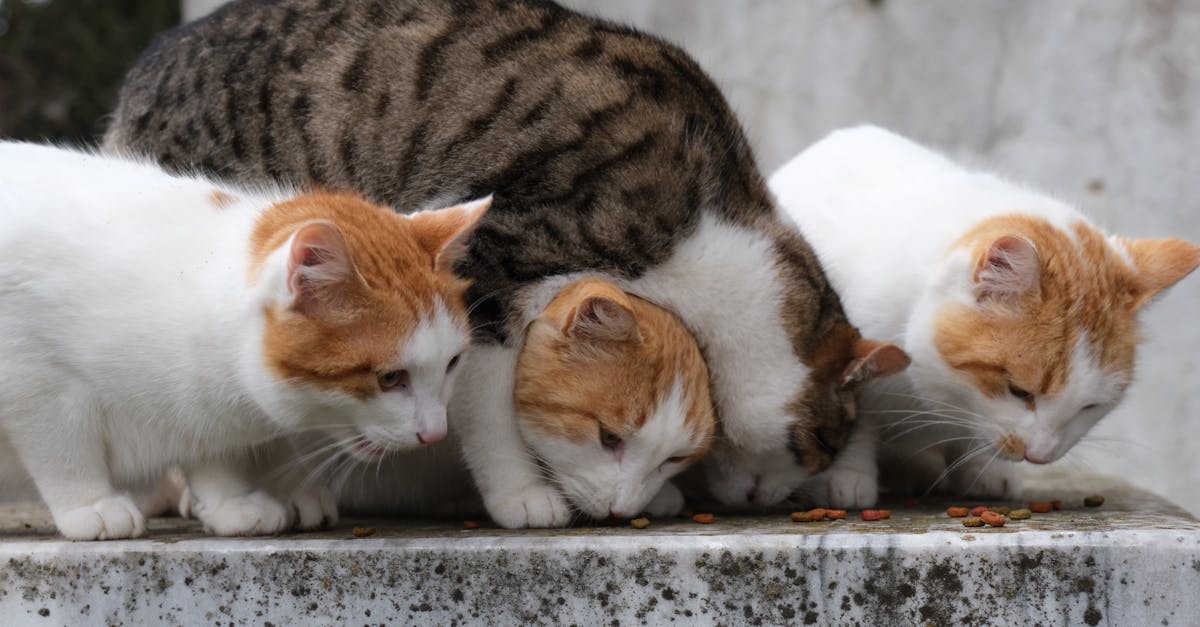
Multi-cat households face a unique feeding challenge: one cat needs weight loss food, another needs kitten food, and a third requires a prescription kidney diet. Feeding each cat appropriately without them eating each other's food requires strategy, patience, and sometimes technology.
- Common Multi-Cat Feeding Challenges
- Feeding Strategies
- Strategy 1: Separate Rooms
- Strategy 2: Elevated Feeding
- Strategy 3: Microchip Feeders
- Strategy 4: Size-Selective Feeding
- When All Cats Eat the Same Food
- Preventing Food Bullying
- Frequently Asked Questions
- Can my healthy cat eat prescription kidney food?
Common Multi-Cat Feeding Challenges
- Weight differences: One cat overweight, another underweight
- Age differences: Kitten and senior in same household
- Prescription diets: One cat on medical food, others on regular
- Food thieves: Dominant cat eats everyone's food
- Different preferences: One cat loves pate, another only eats shreds
Feeding Strategies
Strategy 1: Separate Rooms
- Feed each cat in a different room with the door closed
- Allow 20-30 minutes, then pick up all food
- Most reliable method for medical diets
- Requires schedule commitment
Strategy 2: Elevated Feeding
- Feed the slim/young cat on a high surface the overweight/senior cat cannot reach
- Works when cats have different mobility levels
Strategy 3: Microchip Feeders
- SureFeed Microchip Pet Feeder: Opens only for the registered cat's microchip
- Each cat has their own feeder with their specific food
- Prevents food stealing completely
- Cost: ~$150-200 per feeder
- Best long-term solution for prescription diet households
Strategy 4: Size-Selective Feeding
- Place small cat's food inside a box with an opening too small for the large cat
- DIY solution: cut a hole in a storage bin that only the smaller cat fits through
When All Cats Eat the Same Food
Sometimes the simplest solution is finding ONE food that works for everyone:
- All Life Stages food: Meets kitten and adult nutritional requirements
- Control portions individually: Give the overweight cat less, the thin cat more
- High-quality wet food: Generally appropriate for most healthy cats of all ages
- This does NOT work if one cat requires a prescription diet -- medical foods must be exclusive
Preventing Food Bullying
- Feed in separate locations (even different corners of the same room)
- Supervise mealtimes initially to ensure each cat eats their own food
- Multiple water stations prevent resource guarding
- If one cat consistently bullies others away from food, separate room feeding is necessary
Frequently Asked Questions
Can my healthy cat eat prescription kidney food?
Short-term (occasional nibble) is harmless. Long-term, prescription renal diets have reduced protein and phosphorus that a healthy cat does not need -- it could lead to muscle wasting and nutritional gaps over time. The reverse is more dangerous: a kidney-disease cat eating regular food accelerates kidney damage. Microchip feeders are the best investment for households mixing prescription and regular diets.