
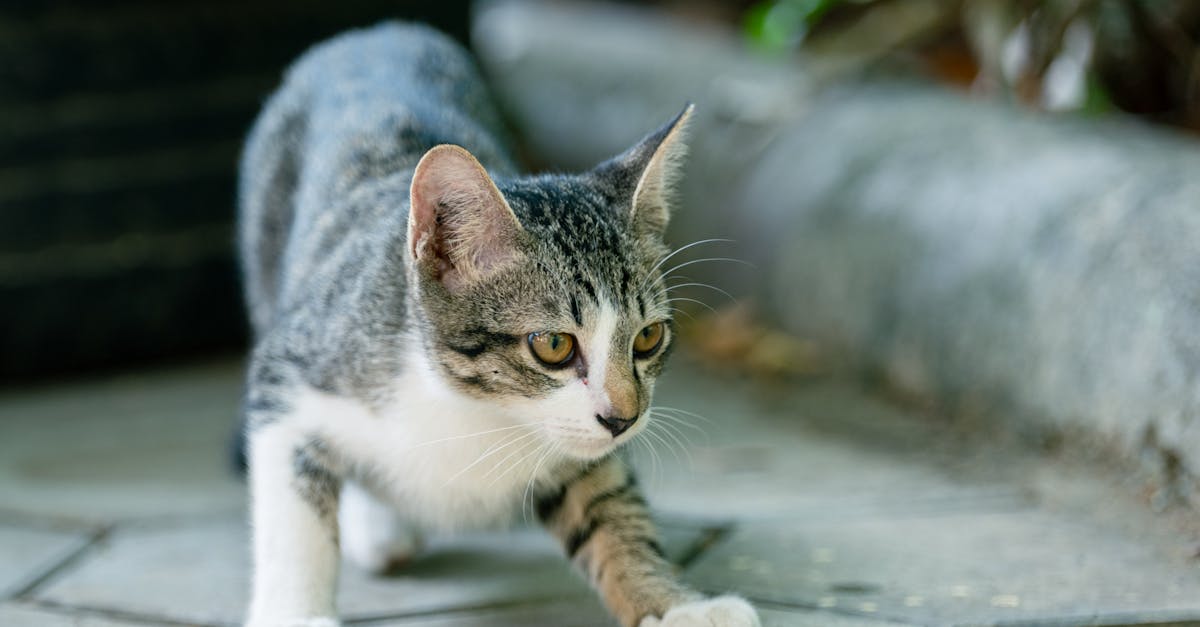
Cats communicate primarily through body language -- yet most owners misread their signals by applying dog or human interpretations. A wagging tail does NOT mean happiness in cats. Slow blinking IS a kiss. Understanding feline body language transforms your relationship and prevents bites and scratches.
Tail Positions
| Position | Meaning |
|---|---|
| Straight up (vertical) | Confident, happy, friendly greeting |
| Straight up with curved tip | Playful, curious, approachable |
| Horizontal (relaxed) | Neutral, calm, assessing |
| Low or tucked | Fearful, anxious, submissive |
| Puffed up (bottle brush) | Terrified or aggressive -- trying to look larger |
| Thrashing/whipping side to side | Agitated, overstimulated, annoyed -- STOP petting |
| Slow swish | Focused, hunting mode, about to pounce |
| Wrapped around body (sitting) | Content but reserved, not inviting interaction |
| Wrapped around your leg | Affection, claiming you with scent |
Ear Positions
- Forward: Alert, interested, engaged
- Slightly back: Relaxed, content
- Flat sideways (airplane ears): Anxious, conflicted, uncomfortable
- Flat back against head: Fearful or aggressive -- do NOT approach
- Rotating independently: Listening to multiple sounds, assessing environment
Eye Communication
- Slow blink: "I trust you" / "I love you" -- the cat kiss. Blink slowly back to reciprocate.
- Direct stare: Challenge, threat, or intense focus (hunting)
- Half-closed eyes: Relaxed, content, trusting
- Wide eyes, dilated pupils: Fear, excitement, or aggression (context matters)
- Constricted pupils: Focused, potentially aggressive, or bright light
Body Postures
- Belly exposed: Trust and relaxation -- but NOT always an invitation to touch (many cats will bite/scratch if belly is rubbed)
- Arched back, fur raised: Defensive aggression -- "I'm scared but will fight"
- Crouched low: Fear, submission, or stalking (context determines which)
- Head bunting: Affection and scent marking -- claiming you as theirs
- Kneading (making biscuits): Deep contentment, comfort (retained from kitten nursing behavior)
The Overstimulation Sequence
Why cats bite during petting -- the warning signs in order:
- Tail begins twitching or swishing
- Ears rotate sideways or flatten slightly
- Skin ripples or twitches (especially along the back)
- Stops purring
- Turns head toward your hand
- BITE -- if you missed all previous warnings
Frequently Asked Questions
Why does my cat show me its belly then attack when I touch it?
The belly is the most vulnerable area -- showing it means "I trust you enough to be vulnerable." It does NOT mean "please touch here." In cat language, belly exposure is a display of trust, not an invitation for contact. Many cats reflexively defend the belly because it protects vital organs. Some cats do enjoy belly rubs (breed and individual personality dependent), but always approach slowly and watch for the first twitch of the tail or skin -- that is your cue to stop.