
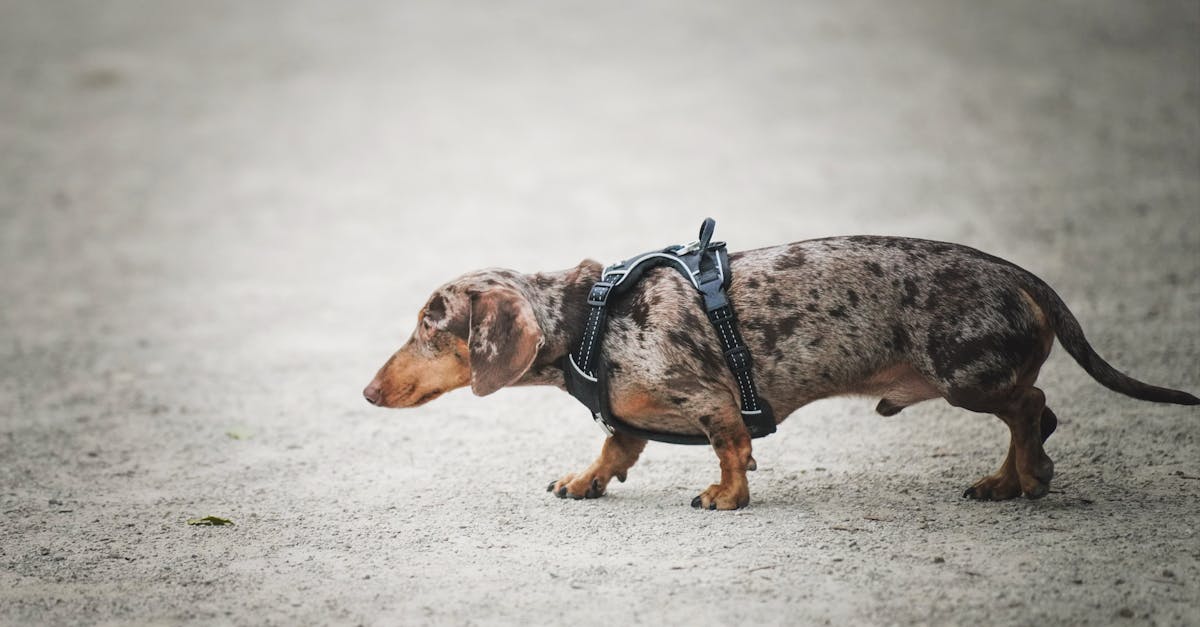
Intervertebral disc disease (IVDD) is the most common spinal condition in dogs, affecting up to 25% of Dachshunds and significant percentages of other chondrodystrophic (short-legged) breeds. It ranges from mild back pain to complete paralysis, and the speed of treatment — particularly surgical decompression — directly determines the probability of recovery.
What Is IVDD
Intervertebral discs are cushions between spinal vertebrae. They have a tough outer ring (annulus fibrosus) and a gel-like center (nucleus pulposus). In IVDD, disc material herniates (pushes out) and compresses the spinal cord. Two types:
- Hansen Type I: Acute, explosive disc herniation. Young to middle-aged chondrodystrophic breeds. Sudden onset — can go from normal to paralyzed in hours.
- Hansen Type II: Chronic, gradual disc protrusion. Older large-breed dogs. Slow onset — progressive weakness over weeks-months.
Grading System
| Grade | Signs | Treatment | Recovery Prognosis |
|---|---|---|---|
| Grade 1 | Pain only (hunched back, crying out, reluctance to move) | Conservative (rest + pain management) | >90% |
| Grade 2 | Pain + mild weakness (wobbly walking, knuckling) | Conservative or surgical | 85-95% |
| Grade 3 | Unable to walk but can move legs voluntarily | Surgical recommended | 80-90% with surgery |
| Grade 4 | Paralyzed, no voluntary movement, still has deep pain sensation | Emergency surgery | 85-95% with prompt surgery |
| Grade 5 | Paralyzed, NO deep pain sensation | Emergency surgery (time-critical) | 50-60% if surgery within 24-48 hrs; <5% if delayed |
High-Risk Breeds
- Dachshund: 10-25x higher risk than other breeds. The poster child for IVDD.
- French Bulldog
- Beagle
- Cocker Spaniel
- Shih Tzu
- Pekingese
- Basset Hound
- Corgi
Conservative Management (Grade 1-2)
- STRICT crate rest: 4-6 weeks. This is not "less activity" — it means a crate/pen with bathroom breaks on leash only. The most critical aspect of conservative treatment.
- Pain management: NSAIDs, gabapentin, muscle relaxants (methocarbamol)
- No jumping, stairs, or rough play during recovery or after
- Physical rehabilitation after the acute phase to rebuild strength
Surgical Treatment (Grade 3-5)
- Hemilaminectomy/ventral slot: Surgical removal of herniated disc material to decompress the spinal cord
- Cost: $3,000-$8,000 (including MRI for surgical planning)
- Recovery: 6-12 weeks of restricted activity with gradual return to function
- Physical rehabilitation: Critical for recovery — underwater treadmill, exercises, laser therapy
Prevention
- Maintain lean body weight (extra weight stresses the spine)
- Use ramps for furniture and cars (no jumping)
- Harness instead of collar (no neck stress)
- Support back when carrying Dachshunds (one hand under chest, one under hips)
- Avoid high-impact activities (no Frisbee catching for disc-prone breeds)
Frequently Asked Questions
Can my dog walk again after IVDD paralysis?
Grade 1-4 with surgery: 85-95% regain walking ability. Grade 5 with prompt surgery: approximately 50-60%. Without surgery, Grade 3+ dogs have poor recovery odds. Some Grade 5 dogs that don't recover walking can live happy lives with wheelchair carts.