
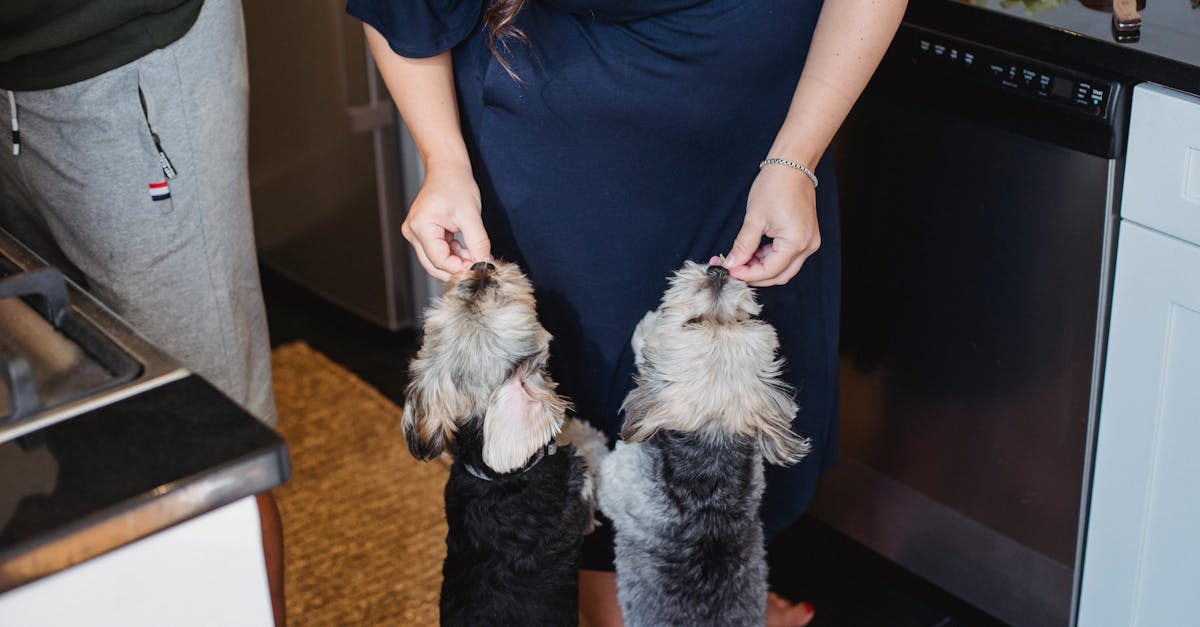
Feeding one dog is straightforward. Feeding three dogs — a puppy on growth formula, an adult on weight management, and a senior on kidney diet — is a logistical challenge that tests patience, creativity, and physical space. Multi-dog households with different dietary needs are common, and the consequences of cross-feeding range from mild (weight gain) to dangerous (a kidney dog eating high-phosphorus puppy food).
- Common Multi-Dog Feeding Scenarios
- Feeding Strategies
- Separate Room Feeding
- Timed Feeding (vs. Free Feeding)
- Supervised Feeding
- Elevated/Barrier Feeding
- Microchip-Activated Feeders
- Treat Management
- Frequently Asked Questions
- Can all my dogs eat the same food?
- Will it hurt my healthy dog to eat prescription food?
Common Multi-Dog Feeding Scenarios
| Scenario | Risk of Cross-Feeding | Strategy |
|---|---|---|
| Puppy + adult dog | Moderate — adult gains weight on puppy food | Separate feeding; puppy food is calorie-dense |
| Diet dog + normal weight dog | Low-moderate — diet dog eats normal food, stays overweight | Separate rooms; timed feeding |
| Prescription diet dog + healthy dog | High — healthy dog doesn't need Rx food; Rx dog needs specific nutrition | Strict separation; supervised meals |
| Food allergy dog + other dogs | Very high — single exposure to allergen triggers reaction | Complete separation; clean up immediately |
Feeding Strategies
Separate Room Feeding
The most reliable method. Feed each dog in a different room with the door closed. Allow 15-20 minutes to eat, then pick up all bowls. No food stealing possible.
Timed Feeding (vs. Free Feeding)
Free feeding (food available all day) is impossible in multi-dog households with different diets. Switch to scheduled meals: food down for 15-20 minutes, then removed. Dogs quickly learn the routine.
Supervised Feeding
Feed dogs in the same room but supervised — stand between them and redirect any food-stealing attempts. Works for mild cases but unreliable with determined food thieves.
Elevated/Barrier Feeding
Feed the smaller dog on an elevated surface or behind a baby gate that the larger dog can't access. Creative use of physical space solves many multi-dog feeding problems.
Microchip-Activated Feeders
SureFeed and similar products open only for the registered pet's microchip. Effective for cats and small dogs. Limited by bowl size for larger dogs but excellent technology for small/medium dog households.
Treat Management
- Use the most restricted dog's safe treats for ALL dogs. If one dog can't have high-fat treats, nobody gets high-fat treats.
- Train all dogs to accept treats in their own space (go to mat/bed).
- Keep treat calories consistent across dogs or adjust meal portions individually.
Frequently Asked Questions
Can all my dogs eat the same food?
If all dogs are healthy adults of similar size and activity level — yes, a quality adult maintenance food works for everyone. If any dog has a medical condition, is a puppy, is on weight management, or needs prescription food, separate diets are necessary.
Will it hurt my healthy dog to eat prescription food?
Depends on the prescription. Renal diets (low protein/phosphorus) are not ideal for healthy dogs long-term. GI diets are generally fine. Weight management food won't harm a normal-weight dog but may not provide optimal nutrition for active dogs. When in doubt, ask your vet.